
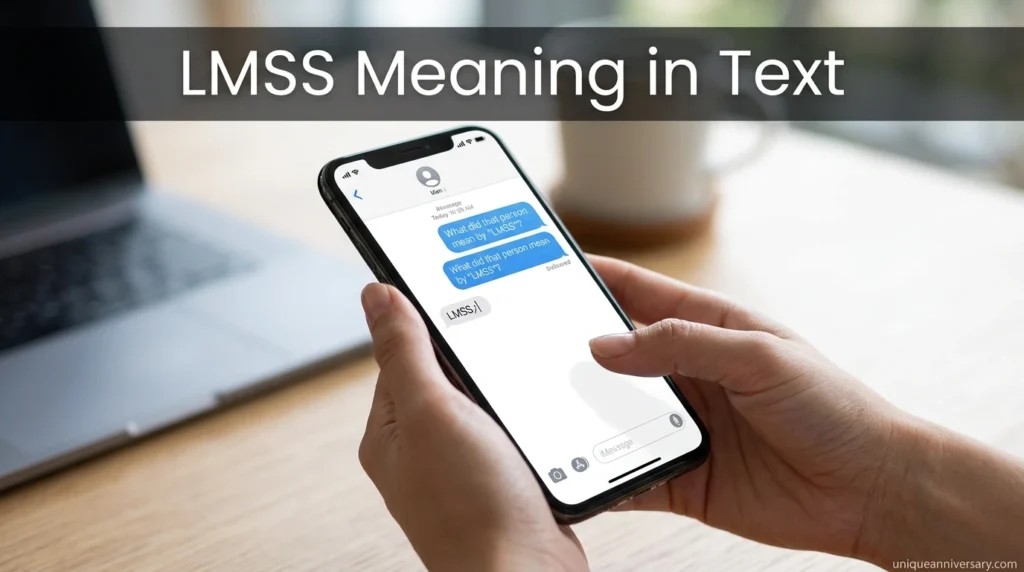
Late at night, your phone lights up with a message from a friend. The conversation has been flowing quickly—memes, jokes, random thoughts—and then suddenly they reply with just four letters: “LMSS.” You pause for a moment, reread the message, and wonder if you missed something important. Is it a compliment? A joke? A secret code everyone else somehow understands?
In today’s world of texting, social media, and instant communication, abbreviations appear everywhere. Some become so common that they slip naturally into daily conversations, while others leave people confused and searching for answers. That is exactly why understanding the LMSS meaning in text matters. Small internet acronyms may seem insignificant, but they often shape how people communicate emotions, reactions, and social connections online.
Whether you saw LMSS in a Snapchat message, Instagram comment, TikTok caption, or casual text conversation, this guide will help you fully understand what it means, how people use it, and why it has become part of digital culture. Beyond the basic definition, we’ll also explore the emotional context, social meaning, misunderstandings, and real-life situations where LMSS appears most often.
What Does LMSS Mean in Text?
The most common LMSS meaning in text is:
“Like My Status Seriously.”
People usually use LMSS on social media platforms when they want others to engage with their post, story, photo, or status update. It acts as a playful or direct request for likes, reactions, comments, or attention.
For example:
- “New selfie uploaded… LMSS 😂”
- “Feeling cute today, LMSS!”
- “Birthday vibes 🎉 LMSS”
In these situations, the sender is encouraging friends or followers to interact with their content. It is often lighthearted and casual rather than demanding.
The phrase became popular during the rise of social media platforms where “likes” became a major form of online interaction. People began shortening longer phrases into quick abbreviations, and LMSS naturally emerged as part of internet slang culture.
Although the phrase may sound simple, its use reflects a larger truth about online communication: people enjoy feeling noticed, supported, and connected. Even a simple “like” can feel validating in social spaces online.
Understanding LMSS is not just about decoding letters—it is about understanding how digital communication reflects human behavior.
Why Internet Slang Like LMSS Became Popular
Modern communication moves incredibly fast. Most people send dozens or even hundreds of short messages daily. Because of this speed, internet users constantly search for quicker ways to express themselves.
That is one reason abbreviations like LMSS became common.
Years ago, people wrote full sentences online. Over time, texting culture evolved into shorter, faster communication styles. Instead of saying:
“Please like my status if you enjoyed it,”
people simply wrote:
“LMSS.”
The shorter version saves time while still delivering the same message.
But popularity is not only about convenience. Internet slang also creates a feeling of belonging. When people understand online abbreviations, they feel connected to a shared digital culture. Using terms like LMSS can make conversations feel more relaxed, playful, and socially aware.
Teenagers and younger social media users especially enjoy internet shorthand because it reflects modern trends and identity. Certain abbreviations become part of online personality and group culture.
Interestingly, internet slang also changes rapidly. Some phrases disappear within months, while others remain popular for years. LMSS has survived because social media interaction itself continues to matter deeply in online life.
As long as people seek likes, reactions, and social engagement, abbreviations connected to those actions will continue appearing in conversations.
The Emotional Side Behind LMSS
At first glance, LMSS might seem shallow or attention-seeking. However, there is often more emotion behind it than people realize.
Human beings naturally want recognition. Online platforms simply transformed that desire into digital interactions—likes, hearts, comments, shares, and reactions.
When someone posts “LMSS,” they may actually be expressing several emotions at once:
- Wanting validation
- Seeking connection
- Hoping for attention
- Sharing excitement
- Looking for reassurance
- Trying to increase engagement
Imagine a teenager posting a new profile picture after feeling insecure about their appearance. Adding “LMSS” might seem casual, but emotionally it could mean:
“I hope people notice me.”
Or consider someone celebrating a birthday online. Their LMSS post may reflect excitement and a desire to share happiness with friends.
Digital interactions can feel surprisingly meaningful because they represent social acknowledgment. Even small reactions remind people that others are paying attention.
Of course, not every LMSS message carries deep emotion. Sometimes it is simply playful internet behavior. Still, understanding the emotional layer helps explain why these abbreviations remain popular despite criticism.
Online communication often hides real feelings behind short phrases and emojis.
How LMSS Is Used on Different Platforms
The LMSS meaning in text stays mostly consistent across platforms, but the style and purpose can change depending on where it appears.
Snapchat Usage
On Snapchat, LMSS is often used in stories or streak-related conversations.
Examples include:
- “Bored 😭 LMSS”
- “Ask me questions, LMSS”
- “New snap filter 😂 LMSS”
Here, the phrase feels playful and social. It encourages quick engagement from friends.
Instagram Usage
Instagram users may include LMSS in captions or stories to gain more likes and interaction.
For example:
- “Vacation pics finally here 🌴 LMSS”
- “Rate my outfit 👀 LMSS”
Instagram culture strongly values visibility and engagement, making LMSS particularly common there.
TikTok Usage
On TikTok, people sometimes use LMSS humorously or ironically.
A creator might say:
- “Spent 4 hours editing this… LMSS 😂”
The phrase becomes both a request and a joke about social media culture itself.
Text Messages
In direct texting, LMSS may appear between friends casually:
- “Posted something funny lol LMSS”
In this context, it feels personal rather than public.
Different platforms shape the tone, but the core purpose remains similar: encouraging interaction and acknowledgment.
Common Situations Where People Say LMSS
LMSS usually appears during moments when someone wants attention focused on a post or update. Certain situations make the phrase especially common.
Posting New Photos
One of the biggest triggers for LMSS usage is uploading new pictures. Whether it is selfies, travel photos, gym progress, or outfit pictures, users often want feedback and reactions.
Celebrations and Special Events
Birthdays, graduations, anniversaries, and achievements frequently inspire LMSS posts. People naturally want others to celebrate with them online.
Feeling Bored
Sometimes people simply want interaction because they feel lonely or bored. A random LMSS post can spark conversations and engagement.
Promoting Content
Users may use LMSS to encourage visibility for videos, edits, memes, or creative work.
Confidence Boosting
Many users secretly hope social interaction will improve their mood or confidence. Likes and comments can feel reassuring during emotional moments.
These situations reveal that LMSS is less about the acronym itself and more about human connection through digital spaces.
Misunderstandings About LMSS
Because internet slang changes quickly, many people misunderstand LMSS when they first encounter it.
Some assume it is:
- A romantic code
- A secret message
- A gaming term
- A rude abbreviation
- A technical phrase
Confusion happens because abbreviations often lack context. Unlike spoken conversation, text messages remove tone of voice and facial expressions.
For example, imagine receiving:
- “LMSS 😂”
Without understanding internet slang, the message may appear confusing or meaningless.
Another misunderstanding involves intention. Some people interpret LMSS as desperate attention-seeking, while others see it as harmless fun.
The truth usually lies somewhere in between.
Online interaction has become deeply integrated into social identity. Wanting engagement does not automatically mean someone is insecure or obsessed with popularity. Often, people simply enjoy social participation.
Understanding context is important. A playful LMSS among friends differs greatly from someone constantly demanding attention online.
Digital communication always carries layers of interpretation.
The Relationship Between LMSS and Social Validation
One reason the LMSS meaning in text became popular is because social media transformed validation into visible numbers.
Likes, comments, and shares became measurable signs of attention. Over time, people began emotionally connecting self-worth with engagement levels.
LMSS reflects this reality.
Imagine two friends posting similar photos. One receives hundreds of likes while the other gets very few. Even if neither person admits it openly, emotional comparison often happens naturally.
This does not mean social media is entirely negative. Positive interaction can strengthen friendships and create encouragement. The problem only arises when validation becomes the main source of self-esteem.
LMSS symbolizes modern online behavior:
- wanting to be seen
- wanting to matter
- wanting connection
In moderation, this is completely normal.
Humans have always sought approval from communities. Social media simply digitized that ancient social instinct.
Understanding LMSS through this lens helps explain why tiny abbreviations can hold emotional weight in modern communication culture.
Is LMSS Considered Cringey or Outdated?
Internet slang constantly evolves. What sounds trendy one year may feel outdated the next.
Some people today consider LMSS slightly old-fashioned or “cringey,” especially compared to newer slang trends. This happens because online language changes rapidly among younger users.
However, that does not mean LMSS disappeared completely.
Many people still use it:
- jokingly
- nostalgically
- casually among friends
- ironically on TikTok or Instagram
Interestingly, internet culture often revives old slang in humorous ways. A phrase once considered outdated may suddenly become funny or trendy again.
Whether LMSS sounds cool depends largely on:
- age group
- platform
- friend circle
- communication style
For some users, it feels playful and harmless. For others, it sounds overly attention-focused.
The important thing is understanding tone and audience. Using LMSS casually with friends usually feels natural, while overusing it repeatedly may seem forced.
Digital language is highly social and context-dependent.
Similar Slang Terms Related to LMSS
LMSS belongs to a larger family of internet abbreviations connected to social media interaction.
Some similar phrases include:
TBH
“TBH” means “To Be Honest.” People often combine it with LMSS in posts like:
- “LMSS for a TBH”
This means: “Like my status and I’ll give you an honest opinion about you.”
Like for Like
This phrase encourages mutual engagement:
- “Like my post and I’ll like yours back.”
CF
“CF” means “Close Friends” on platforms like Instagram and Snapchat.
DM
“DM” stands for “Direct Message.”
IMO / IMHO
These abbreviations mean:
- “In My Opinion”
- “In My Honest Opinion”
Understanding LMSS becomes easier when you recognize the broader culture of internet shorthand.
These phrases create faster communication while also shaping online identity and interaction patterns.
How Older and Younger Generations View LMSS Differently
Generational differences strongly affect how people interpret internet slang.
Younger users who grew up with social media often view LMSS as normal digital language. To them, abbreviations feel natural and efficient.
Older generations may react differently:
- confusion
- amusement
- annoyance
- curiosity
Someone unfamiliar with internet culture might see LMSS and wonder why people cannot simply write full sentences.
But younger users usually prioritize:
- speed
- humor
- trends
- social identity
This generational divide appears in many forms of digital communication.
For example, teenagers might instantly understand:
- “LMSS 😂”
while older adults pause to decode it.
Neither perspective is wrong. Language always evolves with culture and technology. Every generation develops unique communication styles shaped by its environment.
Interestingly, many older users eventually adopt internet slang after repeated exposure through family, work, or social media use.
Digital language slowly becomes mainstream over time.
Real-Life Story: When LMSS Meant More Than Attention
A college student once shared a story about posting “LMSS” during a difficult emotional period. At the time, they felt isolated after moving away from home.
They uploaded a simple photo with:
- “Rough week… LMSS”
At first glance, the post seemed casual. But behind it was a quiet desire for reassurance and connection.
Friends began responding:
- “You okay?”
- “Miss you!”
- “Call me later.”
What started as a small internet phrase unexpectedly opened the door to meaningful support.
This example highlights something important: digital slang may look shallow on the surface, but people often attach genuine emotions to online interaction.
Not every LMSS post carries emotional depth, of course. Many are simply playful social habits.
Still, the story reminds us that online communication often contains hidden emotional layers. A tiny abbreviation can sometimes reflect loneliness, excitement, insecurity, or the need for human connection.
That is why understanding internet slang matters beyond vocabulary alone.
Should You Use LMSS in Conversations?
Whether or not you use LMSS depends on your communication style and audience.
It works best in:
- casual conversations
- social media captions
- friendly online interactions
- humorous posts
However, it may feel inappropriate in:
- professional settings
- formal communication
- academic discussions
- serious conversations
Before using internet slang, consider:
- Who are you talking to?
- Will they understand it?
- Does it match the tone?
- Is it playful or distracting?
Using slang naturally can make communication feel relatable and modern. Overusing it, however, may create confusion or seem immature in certain situations.
A balanced approach usually works best.
The goal of communication is clarity and connection. If LMSS helps create that in your social circle, it can be fun and effective.
If not, full sentences may communicate more clearly.
How Social Media Continues Changing Language
The rise of abbreviations like LMSS proves that language constantly evolves alongside technology.
In the past, new words spread slowly through books, schools, and communities. Today, a phrase can become globally recognized overnight through TikTok, Instagram, or viral memes.
Social media changes language by encouraging:
- shorter communication
- visual expression
- emoji integration
- fast emotional reactions
- trend-based vocabulary
As a result, digital slang evolves faster than traditional language ever did.
Some terms disappear quickly. Others become permanent parts of everyday speech.
LMSS represents one small example of this larger transformation.
The fascinating part is that online slang often reflects deeper cultural patterns:
- the desire for visibility
- the importance of social interaction
- the blending of humor and emotion
- the speed of modern communication
Studying internet slang reveals surprisingly meaningful insights about human behavior in digital spaces.
The Bigger Lesson Behind LMSS
At its core, the LMSS meaning in text is simple: “Like My Status Seriously.” Yet behind those four letters lies something much bigger about modern life.
People want to feel noticed. They want interaction, support, humor, and connection. Social media simply created new ways to express those needs.
LMSS may appear playful, outdated, trendy, or even silly depending on perspective. But it also reflects how humans adapt communication styles to fit changing technology and social environments.
The next time you see LMSS in a message or post, you will understand more than just the abbreviation itself. You will recognize the social habits, emotions, and digital culture surrounding it.
Internet slang is not merely random shorthand. It is a mirror reflecting how people connect in the online world.
Conclusion
Understanding the LMSS meaning in text goes far beyond memorizing a simple internet abbreviation. While it commonly means “Like My Status Seriously,” the phrase also reveals deeper truths about digital communication, social interaction, and emotional connection in modern life. From Snapchat stories to Instagram captions, LMSS became popular because people naturally seek attention, validation, and engagement online. Sometimes it is playful, sometimes ironic, and sometimes emotionally meaningful beneath the surface.
As internet culture continues evolving, slang terms like LMSS will keep changing too. Some phrases will disappear, while others become permanent parts of digital language. What matters most is understanding the context, tone, and human behavior behind these expressions. In many ways, LMSS represents more than a request for likes—it reflects the universal desire to be seen, acknowledged, and connected in an increasingly online world.
FAQs
What does LMSS stand for in texting?
LMSS usually stands for “Like My Status Seriously.” It is commonly used on social media and texting platforms to encourage people to like or react to a post.
Is LMSS still popular today?
LMSS is less trendy than it once was, but many people still use it casually, humorously, or nostalgically on platforms like Snapchat and Instagram.
Is LMSS rude or attention-seeking?
Not necessarily. Most people use LMSS playfully or casually. However, repeated use may sometimes appear attention-focused depending on context and tone.
Where is LMSS most commonly used?
LMSS is commonly seen on Snapchat, Instagram, TikTok, and in casual text conversations among friends.
Can LMSS have different meanings?
While “Like My Status Seriously” is the most common meaning, abbreviations occasionally vary depending on context, group culture, or online communities.
Should I use LMSS in professional communication?
No. LMSS is informal internet slang and works best in casual social interactions rather than professional or academic communication.
Why do people use abbreviations like LMSS?
People use internet abbreviations because they are faster, trendy, and help create relaxed, socially connected online conversations.
What is the difference between LMSS and TBH?
LMSS asks people to like a post or status, while TBH means “To Be Honest” and is often used for opinions or honest comments online.