
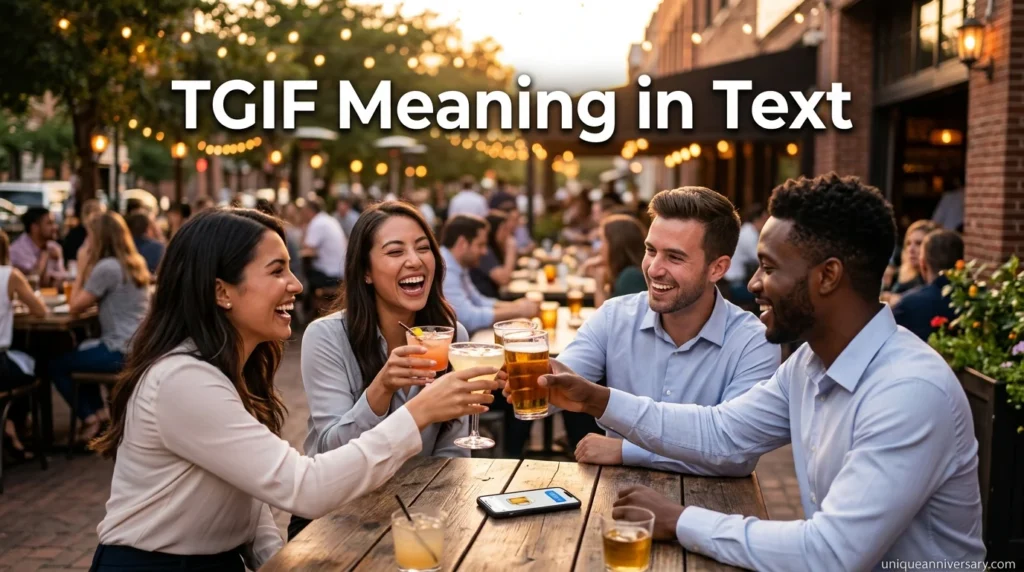
It’s late Friday afternoon. Your phone buzzes with a message from a friend: “TGIF 😩🙌.” Instantly, you understand the emotion behind it. Relief. Excitement. Freedom. Maybe even exhaustion after a long week. Even without a full sentence, those four letters carry a feeling that millions of people recognize the moment they see them.
In today’s fast-moving digital world, short text expressions have become part of everyday communication. From social media captions to workplace chats and casual conversations, abbreviations help people communicate emotions quickly and naturally. One of the most popular among them is TGIF. While it may seem simple on the surface, the phrase holds deeper cultural and emotional meaning than many people realize.
Understanding the TGIF meaning in text is important because it reflects more than just excitement for the weekend. It reveals how people express stress, relief, celebration, humor, and connection through modern communication. Whether you’ve seen it in messages, memes, Instagram captions, or office emails, this guide explores what TGIF truly means, how people use it, and why it continues to stay relevant across generations.
What Does TGIF Mean in Text?
The phrase TGIF stands for “Thank God It’s Friday.” In text conversations, it is commonly used to express happiness or relief that the workweek is finally ending. People often send it on Friday mornings, during lunch breaks, or after finishing work to celebrate the arrival of the weekend.
At its core, TGIF is emotional shorthand. Instead of writing a long explanation about being tired or excited for rest, someone simply types “TGIF,” and the feeling is immediately understood.
For example:
- “TGIF! This week was exhausting.”
- “Finally done with meetings. TGIF.”
- “Coffee, pajamas, and movies tonight. TGIF.”
The phrase is widely used in casual texting, workplace chats, social media posts, and even advertisements. It works because it captures a universal feeling. Most people understand the emotional shift that comes with Friday—the sense that pressure is lifting and personal time is beginning.
Interestingly, TGIF isn’t always used literally. Sometimes people use it humorously after a stressful situation or ironically when they still have weekend responsibilities ahead. Even then, the phrase still communicates emotional release.
Its simplicity is part of its power. Four letters can instantly create connection, especially among people who share similar routines, workloads, or feelings about the end of the week.
Why TGIF Became So Popular
The popularity of TGIF didn’t happen overnight. The phrase became common because it perfectly reflects modern work culture and the emotional rhythm of the week.
For many people, weekdays are associated with structure, deadlines, commuting, school responsibilities, and stress. Friday represents a mental turning point. Even before the weekend officially begins, people feel lighter knowing they have time to rest or enjoy themselves.
The Emotional Routine of the Week
Monday often feels heavy. Wednesday can feel endless. By Friday, people are emotionally ready for a break. TGIF became popular because it captures that emotional transition in a short, relatable way.
The phrase spread quickly through:
- Office conversations
- Television and radio
- Social media trends
- Text messaging culture
- Pop culture references
Over time, TGIF became more than an abbreviation. It became a shared emotional experience.
How Digital Communication Helped It Grow
Texting and social media accelerated the use of short expressions like TGIF. People wanted faster ways to communicate moods and reactions. Abbreviations saved time while still carrying emotional meaning.
A simple “TGIF” in a group chat can instantly set the mood. It tells others:
- “I survived the week.”
- “I’m ready to relax.”
- “Let’s celebrate.”
- “We made it.”
That emotional efficiency is one reason the phrase remains widely used today.
The Emotional Meaning Behind TGIF
Although TGIF literally refers to Friday, emotionally it often symbolizes freedom, recovery, and hope.
People use the phrase because it reflects how emotionally demanding life can become during the week. In many ways, TGIF is less about Friday itself and more about what Friday represents.
Relief After Pressure
Imagine someone finishing a difficult week at work filled with deadlines and stress. When they text “TGIF,” they are expressing emotional release. The phrase becomes a sigh of relief in digital form.
Celebration of Personal Time
For others, TGIF represents reclaiming personal space. It means spending time with family, watching movies, sleeping in, traveling, or simply doing nothing.
The phrase acknowledges that rest matters.
Shared Human Experience
One reason TGIF feels so relatable is because it connects people emotionally. When coworkers or friends say it together, it creates a sense of shared survival and understanding.
Even strangers online recognize the feeling behind it. That emotional familiarity keeps the phrase alive across generations.
How TGIF Is Used in Everyday Text Conversations
The TGIF meaning in text can change slightly depending on the context. Sometimes it sounds excited. Other times it feels sarcastic, funny, or exhausted.
Casual Friend Conversations
Friends often use TGIF while planning weekend activities or talking about how stressful the week felt.
Examples:
- “TGIF! Want to grab dinner tonight?”
- “Barely survived this week. TGIF.”
- “TGIF 😎 Weekend mode activated.”
In these situations, the phrase creates excitement and connection.
Workplace Chats
In office messaging apps or emails, TGIF is often used to lighten the mood.
Examples:
- “Great job this week, team. TGIF!”
- “One more meeting and then TGIF.”
- “TGIF everyone—have a relaxing weekend.”
Here, the phrase helps create friendliness and emotional relief in professional settings.
Social Media Captions
On Instagram, TikTok, or Facebook, TGIF often appears in captions with photos of food, parties, travel, or relaxation.
Examples:
- “Pizza night = TGIF vibes.”
- “Sunset and freedom. TGIF.”
- “Made it through the chaos. TGIF.”
The phrase becomes part of online lifestyle culture.
Different Tones and Interpretations of TGIF
Not every use of TGIF sounds cheerful in the same way. Tone matters a lot in texting culture.
Genuine Excitement
Sometimes people truly feel energized about the weekend ahead.
Example:
- “TGIF! Beach trip starts tomorrow!”
This version feels upbeat and positive.
Exhaustion and Survival
Other times, TGIF communicates emotional burnout.
Example:
- “TGIF… I need sleep for three days.”
This version emphasizes fatigue more than celebration.
Sarcasm or Irony
Some people use TGIF sarcastically when they still have responsibilities waiting.
Example:
- “TGIF. Now time for 20 errands and laundry.”
The humor comes from recognizing that weekends are not always relaxing.
Social Connection
In group chats, TGIF often acts as a bonding phrase. It reminds everyone that they are experiencing similar emotions at the same time.
That shared understanding makes the phrase emotionally powerful despite its simplicity.
TGIF in Social Media Culture
Social media transformed TGIF from a simple abbreviation into a cultural trend.
Every Friday, millions of posts include the phrase alongside:
- Coffee photos
- Office memes
- Party pictures
- Relaxation videos
- Weekend plans
The phrase works well online because it instantly communicates mood without requiring long explanations.
Why People Love Posting TGIF
Social media is emotional storytelling. TGIF helps people express:
- Relief
- Freedom
- Happiness
- Humor
- Anticipation
A Friday post saying “TGIF” often receives strong engagement because followers emotionally relate to it.
The Rise of TGIF Memes
Internet humor helped keep TGIF popular. Memes about surviving stressful workweeks or rushing into the weekend made the phrase feel modern and entertaining.
For example:
- A tired cat image with “TGIF”
- A dancing GIF celebrating Friday
- Funny office jokes about escaping responsibilities
Humor keeps the phrase fresh even after decades of use.
Generational Differences in Using TGIF
Interestingly, different age groups use TGIF in slightly different ways.
Older Generations
Older adults may use TGIF more traditionally. For them, it often directly relates to the end of the workweek.
Example:
- “TGIF! Time to relax after work.”
The phrase feels straightforward and sincere.
Younger Generations
Younger users often use TGIF more creatively or humorously. They may combine it with memes, emojis, slang, or irony.
Example:
- “TGIF but emotionally it’s still Monday.”
This playful use reflects modern internet humor.
Why the Phrase Still Works Across Ages
Despite generational differences, the emotional message remains universal. Everyone understands the feeling of wanting rest after pressure.
That shared emotional truth keeps TGIF relevant even as communication styles evolve.
Common Misunderstandings About TGIF
Although TGIF is simple, people sometimes misunderstand its tone or purpose.
Assuming It Always Means Happiness
Not everyone who says TGIF is genuinely excited. Sometimes the phrase expresses exhaustion more than joy.
A person might type:
- “TGIF. Worst week ever.”
The phrase still signals relief, but not necessarily happiness.
Thinking It’s Unprofessional
Some believe TGIF is too casual for workplace communication. However, many offices use it informally to create friendly interaction.
The key is context. In formal reports or serious discussions, it may feel out of place. But in team chats or casual emails, it often feels warm and relatable.
Believing It’s Outdated
Even though TGIF has existed for decades, it remains active in modern texting culture because emotional experiences around work and stress haven’t changed.
The phrase survives because people still emotionally connect with it.
Psychological Reasons People Relate to TGIF
There is actually a psychological reason why TGIF feels satisfying to say or read.
Anticipation Creates Happiness
Research on human behavior often shows that anticipation can boost mood. Friday represents future enjoyment, rest, or freedom. Even thinking about the weekend can create emotional relief.
TGIF becomes a shortcut for that emotional anticipation.
Shared Language Builds Connection
Humans naturally bond through shared phrases and experiences. When multiple people say TGIF together, they feel emotionally aligned.
It creates:
- Social belonging
- Emotional validation
- Shared humor
- Group identity
Routine Shapes Emotional Reactions
Modern life often follows weekly routines. Because Friday consistently marks transition, people emotionally respond to it in predictable ways.
TGIF reflects that emotional rhythm.
Situations Where Using TGIF Makes Sense
Understanding when to use TGIF can help conversations feel more natural.
End of a Stressful Week
This is the most common situation.
Example:
- “TGIF. I seriously needed this weekend.”
Planning Social Activities
Friends often use it while discussing Friday night plans.
Example:
- “TGIF! Movie night?”
Workplace Team Spirit
Managers or coworkers sometimes use TGIF to create positivity.
Example:
- “Amazing work this week everyone—TGIF!”
Funny or Relatable Social Media Posts
The phrase works well with humor and relatable content.
Example:
- “Current mood: surviving until TGIF.”
Because the phrase is emotionally flexible, it fits many situations naturally.
Situations Where TGIF Might Feel Inappropriate
Even common expressions have moments where they may not fit well.
Serious Professional Conversations
Using TGIF during formal business discussions may appear too casual.
For example:
- Financial reports
- Sensitive workplace issues
- Professional interviews
In these settings, a more neutral tone is usually better.
Conversations About Burnout
Sometimes excessive use of TGIF can unintentionally highlight unhealthy work-life balance patterns.
If someone constantly feels miserable during weekdays, celebrating Friday may reflect deeper stress rather than healthy relief.
Different Cultural Work Schedules
Not everyone follows a Monday-to-Friday schedule. Some people work weekends or rotating shifts, so TGIF may not emotionally connect the same way for them.
Understanding context helps communication feel more thoughtful.
How TGIF Reflects Modern Work-Life Culture
The popularity of TGIF says something important about modern society.
People Crave Balance
The phrase reminds us how much people value rest, personal freedom, and emotional recovery. It reflects the desire for balance between responsibilities and enjoyment.
Work Often Shapes Emotional Identity
Many people emotionally organize life around work schedules. Fridays feel meaningful because they symbolize temporary escape from pressure.
TGIF reveals how deeply routines influence emotions.
The Need for Emotional Expression
Modern communication moves quickly. Short phrases like TGIF allow people to express emotions efficiently without long conversations.
Even a simple abbreviation can create emotional connection when the feeling behind it is widely understood.
Similar Text Slang Related to TGIF
TGIF belongs to a larger world of emotional internet abbreviations and texting slang.
FOMO
“Fear Of Missing Out” describes anxiety about missing experiences.
YOLO
“You Only Live Once” encourages risk-taking or enjoying life.
BRB
“Be Right Back” signals temporary absence in chats.
IMO
“In My Opinion” introduces personal thoughts.
SMH
“Shaking My Head” expresses disappointment or disbelief.
Like TGIF, these phrases survive because they communicate emotion quickly and efficiently.
However, TGIF stands out because it connects directly to shared weekly experiences rather than isolated reactions.
What TGIF Teaches About Human Communication
The continued popularity of TGIF reveals something deeper about how humans communicate emotionally.
People don’t always need long explanations to understand each other. Shared experiences create shortcuts that carry emotional meaning instantly.
When someone texts “TGIF,” they may really be saying:
- “I’m exhausted.”
- “I’m relieved.”
- “I’m happy.”
- “I need rest.”
- “We made it.”
The phrase works because human emotions are often collective. Many people experience similar pressures, routines, and hopes throughout the week.
TGIF also shows how language evolves. A simple abbreviation becomes cultural shorthand through repeated emotional use.
In many ways, it proves that modern communication isn’t becoming less emotional—it’s simply becoming more condensed.
Conclusion
Understanding the TGIF meaning in text goes far beyond knowing that it stands for “Thank God It’s Friday.” The phrase represents relief, excitement, emotional release, humor, and shared human experience. Whether it appears in a casual text, office chat, meme, or social media caption, TGIF reflects the emotional rhythm of modern life and the universal desire for rest after stress.
Its lasting popularity comes from its simplicity and relatability. Four small letters can instantly communicate exhaustion, celebration, anticipation, or connection without needing long explanations. That emotional efficiency is what makes TGIF such a powerful part of digital communication.
As texting culture continues to evolve, expressions like TGIF remind us that even short phrases can carry deep emotional meaning. Sometimes, the smallest messages reveal the biggest truths about how people feel, connect, and navigate everyday life together.
FAQs
What is the full form of TGIF in text?
TGIF stands for “Thank God It’s Friday.” People use it to express happiness or relief that the weekend is beginning.
Is TGIF only used on Fridays?
Mostly yes, but sometimes people use it humorously or sarcastically even outside Friday conversations.
Is TGIF considered professional?
In casual workplace communication, TGIF is generally acceptable. However, it may feel too informal in serious or highly professional situations.
Why do people use TGIF so often?
People use TGIF because it quickly expresses emotions like relief, excitement, stress release, and anticipation for the weekend.
Can TGIF be used sarcastically?
Yes. Many people use TGIF ironically when they still have responsibilities or stressful weekend plans ahead.
Is TGIF still popular today?
Yes, TGIF remains popular in texting, social media, workplace chats, memes, and casual conversations because it reflects universal emotions people still relate to.
What emotion does TGIF usually express?
TGIF commonly expresses relief, happiness, exhaustion, excitement, or emotional freedom after a long week.
Are there alternatives to TGIF in texting?
Yes. People may also use phrases like “Weekend vibes,” “Finally Friday,” or simply share emojis and memes to express similar feelings.