
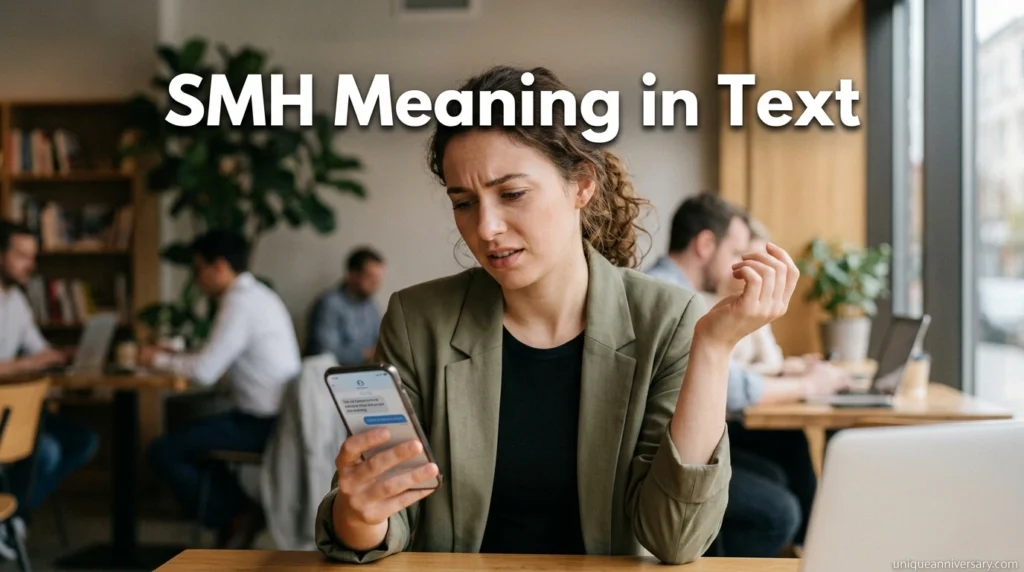
Have you ever been scrolling through messages, paused mid-conversation, and thought, “Wait… what does ‘SMH’ even mean here?” Maybe a friend sent it after a surprising story, or you saw it under a viral post—and suddenly, you felt slightly out of the loop. In a world where communication is getting shorter and faster, tiny abbreviations like SMH carry big emotional weight.
“SMH” is more than just three letters—it’s a subtle expression of disappointment, disbelief, or even quiet judgment. It reflects how we react to situations without saying much at all. Understanding what it means and how it’s used can help you navigate conversations more clearly, avoid misunderstandings, and even express yourself better in digital spaces.
In this article, we’ll explore the meaning of SMH in depth—its origins, emotional nuances, real-life uses, and how it shapes modern communication. By the end, you won’t just know what SMH means—you’ll feel when to use it.
What Does SMH Mean in Text?
At its core, SMH stands for “Shaking My Head.” It’s a shorthand way of expressing disbelief, disappointment, frustration, or mild disapproval—without writing a full sentence.
Imagine someone telling you they failed a test because they didn’t study at all. Instead of typing a long response, you might just reply:
“SMH…”
That simple response communicates a lot:
- You’re disappointed
- You think it was avoidable
- You don’t fully approve
It’s almost like a digital sigh—silent, but meaningful.
What makes SMH powerful is its simplicity and emotional tone. It doesn’t scream anger, but it carries a subtle judgment or reaction that feels very human. In text-based communication, where tone can often be misunderstood, SMH acts as a bridge between emotion and brevity.
The Emotional Meaning Behind SMH
SMH isn’t just a phrase—it’s an emotion condensed into three letters. When someone uses it, they’re usually reacting emotionally rather than logically.
Disappointment
When expectations aren’t met, SMH expresses a quiet sense of letdown. Example: “You didn’t even try? SMH.”
Disbelief
Sometimes, it reflects shock at something unbelievable. Example: “He spent all his savings on that? SMH.”
Mild Frustration
It can also show irritation, but in a controlled way. Example: “You forgot again? SMH.”
Unlike aggressive responses, SMH keeps things subtle. It’s like shaking your head in real life—you’re reacting, but not necessarily escalating the situation.
How SMH Became Popular in Digital Culture
SMH didn’t appear overnight—it grew alongside the evolution of texting and social media. As platforms like messaging apps and online communities expanded, people started looking for faster ways to express emotions.
Typing full sentences became less practical. Instead, abbreviations like:
- LOL (Laughing Out Loud)
- OMG (Oh My God)
- SMH (Shaking My Head)
became part of everyday communication.
SMH gained popularity because it fills a unique emotional gap. It’s not as loud as “WTF” or as cheerful as “LOL.” It sits somewhere in the middle—calm, expressive, and slightly judgmental.
Today, you’ll see SMH everywhere:
- Social media comments
- Text messages
- Online discussions
It has become a universal expression understood across cultures and age groups.
Different Contexts Where SMH Is Used
The meaning of SMH can shift slightly depending on the situation. Context is everything.
Casual Conversations
Among friends, SMH is often playful. Example: “You ate the whole pizza? SMH 😂”
Serious Situations
In more serious contexts, it can reflect genuine disappointment. Example: “They ignored the warning signs. SMH.”
Social Media Reactions
On platforms, SMH is commonly used to react to posts or news. Example: “Another delay? SMH.”
The tone changes based on the situation, but the core idea remains—a reaction of disbelief or disapproval.
SMH in Everyday Conversations
Think about daily conversations—you don’t always respond with full explanations. Sometimes, a simple reaction says more.
SMH works well because it mirrors real-life body language. When you shake your head in person, you don’t need words. The same applies in text.
Example Scenario
Friend: “I stayed up all night gaming and missed my exam.” You: “SMH…”
In that moment, your response communicates:
- You care
- You’re disappointed
- You think they made a poor choice
Without SMH, you might have to type a longer message. With it, the feeling is immediate and clear.
The Tone of SMH: Light vs Serious
One interesting thing about SMH is how its tone can vary.
Lighthearted SMH
Used jokingly or playfully Example: “You still watch that show? SMH 😄”
Serious SMH
Used to express genuine concern or disappointment Example: “They didn’t help when it mattered. SMH.”
The difference often comes down to:
- Emojis
- Context
- Relationship between people
Understanding this tone helps avoid misinterpretation.
Common Misunderstandings About SMH
Even though SMH is widely used, it can sometimes be misunderstood.
Mistaking It for Anger
Some people think SMH is aggressive—but it’s usually not. It’s more subtle than anger.
Overusing It
Using SMH too often can make you seem overly critical or dismissive.
Misreading Tone
Without context, SMH can feel harsh—even if it wasn’t intended that way.
That’s why it’s important to consider:
- Who you’re talking to
- The situation
- The emotional tone
SMH vs Other Text Abbreviations
- SMH: Disappointment or disbelief
- LOL: Amusement or laughter
- SMH: Judgment or reaction
- OMG: Surprise or excitement
- SMH: Mild reaction
- WTF: Strong shock or anger
When Should You Use SMH?
Using SMH effectively is about timing and context.
Use It When:
- You’re reacting to something disappointing
- You want to express disbelief
- You prefer a subtle response
Avoid It When:
- The situation requires empathy
- The person might feel judged
- You need to be clear and direct
For example, if someone shares bad news, replying with SMH might feel insensitive. In such cases, a more supportive message is better.
Real-Life Examples of SMH in Action
Let’s look at how SMH appears in real conversations.
Example 1: Friendship
Friend: “I forgot your birthday.” You: “SMH… really?”
Example 2: Social Media
Post: “People still believe that myth.” Comment: “SMH.”
Example 3: Family
Sibling: “I broke your headphones.” You: “SMH, again?”
Each example shows a slightly different tone—but the same underlying emotion.
The Psychology Behind Using SMH
Why do people prefer SMH over full sentences?
Efficiency
It saves time and effort.
Emotional Expression
It conveys feelings quickly without overexplaining.
Social Connection
It reflects shared understanding—people get what it means.
SMH also allows people to react without escalating conflict. Instead of arguing, they express mild disapproval and move on.
SMH and Modern Communication Trends
We live in a fast-paced digital world where communication is becoming:
- Shorter
- Faster
- More symbolic
SMH fits perfectly into this trend. It’s part of a broader shift toward minimalist communication, where a few characters carry deep meaning.
It also reflects how people balance:
- Emotion
- Efficiency
- Clarity
As language evolves, expressions like SMH become more important—not less.
Practical Tips for Using SMH Effectively
If you want to use SMH naturally, keep these tips in mind:
Match the Tone
Make sure your SMH fits the situation.
Add Context if Needed
Pair it with a short sentence if clarity is important. Example: “SMH, you should’ve told me earlier.”
Avoid Overuse
Too much SMH can reduce its impact.
Know Your Audience
Some people may not understand or appreciate it.
Used wisely, SMH can enhance your communication instead of confusing it.
What SMH Teaches About Communication
SMH isn’t just slang—it teaches us something deeper about how we communicate.
It shows that:
- Less can be more
- Emotions don’t always need long explanations
- Shared understanding strengthens connection
In many ways, SMH reflects the human need to express feelings quickly and efficiently.
Conclusion
SMH may seem like a small abbreviation, but it carries a surprisingly rich emotional meaning. From expressing disappointment to reacting with disbelief, it has become a powerful tool in modern communication. Its simplicity allows people to connect, react, and communicate emotions without lengthy explanations.
Understanding SMH isn’t just about knowing what it stands for—it’s about recognizing the tone, context, and subtle emotion behind it. When used thoughtfully, it can enhance conversations and make communication feel more natural and human.
In a world where words are becoming shorter but meanings remain deep, SMH reminds us that even the smallest expressions can say a lot.
FAQs
What does SMH mean in texting?
SMH means “Shaking My Head.” It expresses disappointment, disbelief, or mild frustration in text conversations.
Is SMH rude to use?
Not necessarily. It depends on the context and tone. It can feel rude if used in sensitive situations.
Can SMH be used in a funny way?
Yes, SMH is often used humorously among friends to tease or joke about situations.
What is the difference between SMH and LOL?
SMH shows disappointment or disbelief, while LOL expresses laughter or amusement.
Should I use SMH in professional communication?
It’s best to avoid SMH in formal or professional settings, as it may seem informal or unclear.
Why do people use SMH instead of full sentences?
People use SMH for convenience and quick emotional expression without typing long responses.