
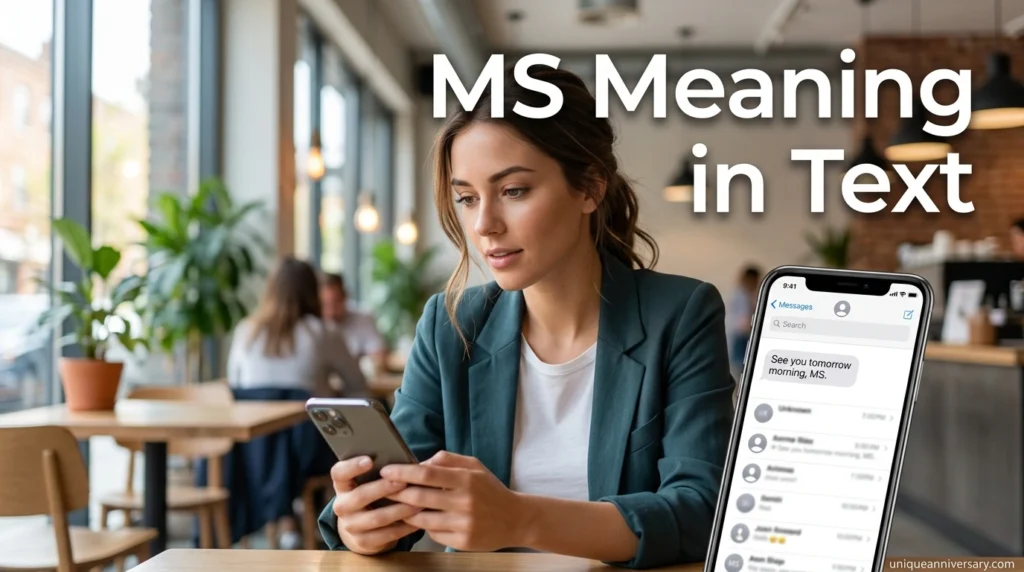
Have you ever opened a text message, scrolled through social media, or read a comment online and suddenly paused at two simple letters: “MS”? At first glance, it seems easy to understand, yet the meaning can completely change depending on who sent it, where it appeared, and what the conversation was about. One person might use it casually in a gaming chat, another in a romantic conversation, and someone else in a professional message. That tiny abbreviation can quietly carry different emotions, intentions, and interpretations all at once.
In today’s digital world, text shortcuts shape how people communicate. They save time, create group identity, and sometimes even express feelings more effectively than full sentences. But they can also cause confusion when the same abbreviation has several meanings. Understanding “MS meaning in text” is important because it helps people avoid misunderstandings and communicate more confidently online. Whether you are chatting with friends, texting a crush, reading social media comments, or navigating workplace conversations, knowing the different meanings of “MS” can help you better understand tone, context, and intent in everyday digital communication.
The Basic Meaning of MS in Text
The abbreviation “MS” most commonly stands for “Miss” in text conversations. People often use it before a woman’s name as a polite or respectful title. For example, someone may type “MS Sarah will join the meeting later” or “Thanks, MS Anna.” In this context, the abbreviation works similarly to formal written communication.
However, texting culture rarely limits abbreviations to one meaning. In casual chats, “MS” can also stand for phrases like “multiple sclerosis,” “Microsoft,” “message,” or even “mood swings,” depending on the situation. The meaning changes according to context, tone, and platform.
Imagine receiving a message from a friend saying, “I sent you an MS earlier.” In that case, they probably mean “message.” But if someone in a health discussion mentions “living with MS,” they are almost certainly referring to the medical condition multiple sclerosis.
This flexibility is exactly why internet slang can feel confusing. Unlike traditional language, texting abbreviations depend heavily on shared understanding between people. The same two letters can carry emotional, professional, humorous, or serious meanings within seconds.
Understanding context becomes the key. Instead of focusing only on the abbreviation itself, readers should pay attention to the surrounding words, the relationship between the speakers, and the setting of the conversation.
Why Abbreviations Like MS Became Popular
Modern communication moves incredibly fast. People text while walking, working, eating, traveling, or multitasking through busy schedules. Abbreviations like “MS” became popular because they make communication quicker and more convenient.
Years ago, older mobile phones had character limits and slower typing systems. Shortened forms helped users save both time and space. Even though smartphones now offer full keyboards and voice typing, internet slang remains deeply rooted in online culture.
Speed and Convenience
Typing two letters instead of a full word feels effortless. Instead of writing “message,” someone simply types “MS.” Over time, these shortcuts became habits rather than necessities.
Social Identity
Text abbreviations also create a sense of belonging. Teenagers, gaming communities, coworkers, and online friend groups often develop shared language styles. Using abbreviations makes conversations feel casual, modern, and connected.
Emotional Tone
Interestingly, abbreviations sometimes soften communication. A quick “MS me later” can sound lighter and friendlier than a fully formal sentence. Digital language often prioritizes emotional efficiency over grammatical perfection.
These small language changes reveal something larger about human communication: people naturally adapt language to fit their lifestyles. The rise of texting culture reflects the desire for speed, connection, and simplicity in everyday interactions.
MS as “Miss” in Online Conversations
One of the oldest and most traditional meanings of “MS” is “Miss.” In written communication, “Ms.” became widely used as a respectful title for women regardless of marital status. Online texting adapted this formal title into casual digital shorthand.
For example:
- “MS Emily will call you tomorrow.”
- “Thank you, MS Rachel.”
- “Happy birthday, MS Taylor!”
In many professional or educational conversations, this usage remains common. Teachers, coworkers, and clients may use “MS” to show politeness while keeping messages brief.
Respect and Tone
Using “MS” before someone’s name often changes the emotional tone of a conversation. It can create a respectful atmosphere without sounding overly formal. In workplace chats, this small abbreviation helps maintain professionalism.
Generational Differences
Older generations may interpret “MS” as “Miss” more quickly because they are familiar with traditional titles. Younger users, however, might immediately think of texting slang or social media meanings instead.
This generational gap sometimes causes misunderstandings. Someone using “MS” respectfully could accidentally confuse a younger reader who assumes a completely different interpretation.
The important lesson here is that digital communication often blends traditional language with internet culture. “MS” reflects how old communication habits evolve within modern texting environments.
MS as “Message” in Casual Texting
Among younger users and fast-paced online conversations, “MS” sometimes means “message.” This usage appears especially in gaming chats, social media conversations, and direct messaging platforms.
Examples include:
- “Send me an MS later.”
- “I dropped you an MS.”
- “Check your MS.”
In these situations, the abbreviation functions as shorthand for private communication. Instead of writing “message,” users shorten it for speed and convenience.
Why People Use It
Fast digital communication encourages efficiency. Gamers coordinating strategies or friends chatting rapidly often shorten words automatically. The abbreviation becomes part of the rhythm of conversation.
Context Matters Most
Imagine two scenarios:
- “MS Johnson emailed the report.”
- “I sent you an MS.”
The first clearly refers to a title, while the second refers to a message. The surrounding words completely change the meaning.
This demonstrates one of the most fascinating aspects of digital language: humans naturally decode meaning through context clues. Even when abbreviations seem unclear, the brain quickly analyzes nearby words, tone, and conversation flow.
The flexibility of “MS” shows how online language evolves through shared understanding rather than strict grammatical rules.
MS in Medical Conversations
In health-related discussions, “MS” most commonly refers to multiple sclerosis, a disease affecting the nervous system. This meaning is especially important because misunderstanding it could create confusion during serious conversations.
Someone might say:
- “My aunt was diagnosed with MS.”
- “Living with MS can be challenging.”
- “Researchers are studying treatments for MS.”
Here, the abbreviation carries emotional and medical weight rather than casual slang.
Emotional Sensitivity
Medical abbreviations often become part of everyday language for patients and families. Using “MS” in support groups or healthcare discussions creates faster communication among people familiar with the condition.
The Importance of Awareness
For people unfamiliar with medical terminology, abbreviations can initially feel confusing. However, context usually clarifies the meaning quickly. Health-related words nearby often signal the medical interpretation.
This reminds us that abbreviations are not always playful internet slang. Sometimes they represent deeply personal experiences, emotional struggles, or important real-world topics.
Being aware of these possibilities helps readers respond more thoughtfully and respectfully during conversations.
MS on Social Media Platforms
Social media gives abbreviations entirely new life. On platforms like Instagram, TikTok, Snapchat, and X, users constantly invent and adapt shorthand expressions.
“MS” may appear in captions, comments, memes, or direct messages with different meanings depending on online culture.
Humor and Trends
Sometimes abbreviations spread simply because influencers or online communities popularize them. A phrase can suddenly become trendy and gain a temporary meaning unrelated to its traditional use.
Platform-Specific Language
Different platforms encourage different communication styles:
- Gaming chats favor speed.
- Professional networks prefer clarity.
- Social media comments encourage creativity.
- Private messaging apps support casual shorthand.
Because of this, “MS” can feel completely different depending on where you see it online.
Social media has transformed language into something highly adaptable and community-driven. Abbreviations now evolve faster than ever before, often changing meanings within weeks or months.
Common Misunderstandings Around MS
One of the biggest challenges with abbreviations is misunderstanding. Since “MS” has multiple meanings, readers can easily interpret it incorrectly.
Imagine someone texting:
- “I heard she has MS.”
Without context, readers may wonder:
- Is it a medical condition?
- Is it referring to a person named Miss?
- Is it slang?
How Misunderstandings Happen
Texting removes important communication cues like facial expressions, voice tone, and body language. Readers rely entirely on written context.
A short abbreviation may save time, but it can also create uncertainty when conversations lack detail.
Avoiding Confusion
People often solve this problem naturally by adding context:
- “She has multiple sclerosis.”
- “MS Taylor will arrive soon.”
- “Check your messages.”
Adding even one extra word can dramatically improve clarity.
Digital communication teaches an interesting lesson: while speed matters, clarity matters more. Effective communication balances convenience with understanding.
How Context Changes the Meaning of MS
Context acts like a translator for abbreviations. Without it, “MS” remains ambiguous. With it, the meaning becomes obvious almost instantly.
Consider these examples:
- “MS Brown graded our assignments.”
- “My brother was diagnosed with MS.”
- “Send me an MS when you get home.”
Each sentence guides the reader toward a different interpretation.
Relationship Between Speakers
The relationship between people also shapes meaning. Friends chatting casually may use “MS” differently than coworkers or healthcare professionals.
Emotional Tone
Tone influences interpretation too. Serious conversations often point toward medical meanings, while playful chats suggest slang or shorthand.
Digital Communication Skills
Learning to understand abbreviations is actually part of modern communication literacy. People constantly interpret incomplete information online by using context clues, emotional awareness, and social understanding.
This skill has become increasingly valuable in the digital age where messages are often brief, fast, and informal.
MS in Professional and Workplace Communication
In workplace settings, “MS” most often appears in formal titles or company-related language. Employees may use it respectfully in emails, group chats, or meeting discussions.
Examples include:
- “MS Carter approved the proposal.”
- “Please contact MS Lee for details.”
It can also refer to Microsoft products like:
- MS Word
- MS Teams
- MS Excel
Professional Clarity
Unlike casual texting, workplace communication usually values clarity over slang. Professionals often avoid ambiguous abbreviations unless everyone understands the meaning.
Respectful Communication
Using “MS” as a title helps maintain politeness without sounding overly rigid. In multicultural workplaces, titles can also show professionalism and cultural awareness.
Technology Influence
The rise of workplace technology introduced additional meanings. Many employees automatically associate “MS” with Microsoft tools because they use them daily.
This shows how technology shapes language. A simple abbreviation evolves alongside cultural and professional habits.
Emotional Meaning Behind Short Text Abbreviations
At first glance, abbreviations seem purely practical. But emotionally, they often reveal how people want to connect with others.
Shortened language can signal:
- Comfort
- Familiarity
- Friendship
- Informality
- Digital fluency
When someone uses abbreviations naturally, it may indicate they feel relaxed around the other person.
Casual Communication Creates Connection
Imagine two messages:
- “Please send me a message later.”
- “MS me later.”
The second feels lighter and more conversational. The wording subtly changes the emotional atmosphere.
Online Identity
People also use abbreviations to shape identity. Internet slang often reflects personality, age group, online culture, or social circles.
In this way, abbreviations become more than language shortcuts. They become social signals that communicate mood, belonging, and emotional tone.
Digital language may look simple on the surface, but it carries surprisingly complex human meaning underneath.
Generational Differences in Understanding MS
Different generations often interpret abbreviations differently because they grew up with different communication styles.
Older adults may immediately recognize “MS” as a formal title, while younger internet users might associate it with messaging slang or social media language.
Technology Shapes Language
Each generation develops communication habits based on the technology available during their formative years.
- Older generations learned formal written communication first.
- Younger generations grew up with texting, emojis, and internet shorthand.
As a result, the same abbreviation can trigger completely different assumptions.
Real-Life Example
A teacher might write:
- “MS Roberts will supervise the event.”
A student unfamiliar with traditional titles might briefly wonder whether “MS” means something else entirely.
These moments highlight how digital communication constantly blends old and new language systems together.
Understanding these differences encourages patience and clearer communication between generations.
Should You Use MS in Text Messages?
Whether or not you should use “MS” depends on your audience, relationship, and communication goals.
When It Works Well
“MS” works effectively in:
- Casual texting
- Fast online chats
- Friendly conversations
- Communities familiar with the abbreviation
When You Should Avoid It
Avoid unclear abbreviations when:
- Discussing serious topics
- Communicating professionally
- Speaking with unfamiliar audiences
- Providing important information
For example, in medical or workplace communication, writing the full phrase may prevent confusion.
The Best Approach
Good communication is not about using the most abbreviations. It is about helping others understand your message clearly and comfortably.
A useful rule is simple:
- Use shorthand when clarity remains strong.
- Use full wording when confusion is possible.
This balanced approach keeps communication efficient while still respectful and understandable.
How Internet Language Continues to Evolve
The story of “MS meaning in text” reflects something much larger: language never stops changing. Digital culture constantly creates new abbreviations, new meanings, and new communication habits.
Words that once belonged only to formal writing now appear casually online. Slang terms spread globally within days through social media trends.
Faster Language Evolution
In previous generations, language changes happened slowly over decades. Today, online communities can reshape communication almost overnight.
Human Creativity
People naturally experiment with language. They shorten phrases, invent slang, combine emojis, and adapt meanings creatively.
“MS” survives because it remains flexible. Its meaning shifts depending on need, context, and culture.
This flexibility reflects human communication itself. Language works best not when it stays fixed, but when it adapts to real human experiences and changing social environments.
Lessons We Can Learn From Text Abbreviations
At first, abbreviations like “MS” may seem insignificant. But they reveal important truths about communication and human behavior.
Clarity Matters
Even tiny abbreviations can change meaning dramatically. Thoughtful communication helps prevent misunderstandings.
Context Is Powerful
Words rarely exist alone. Meaning depends on emotional tone, relationships, setting, and shared understanding.
Language Reflects Culture
Text slang reflects modern lifestyles built around speed, technology, and constant connection.
Communication Is Always Evolving
The way people speak online today may look completely different a decade from now. Language continuously adapts to human needs.
Understanding abbreviations is not just about decoding slang. It is about understanding how people connect, express identity, and build relationships in the digital world.
Conclusion
The phrase “MS meaning in text” may look simple, but its interpretations reveal how dynamic modern communication has become. Depending on context, “MS” can mean “Miss,” “message,” multiple sclerosis, Microsoft, or something entirely different within specific online communities. The true meaning depends on surrounding words, emotional tone, platform culture, and the relationship between the people communicating.
As texting and social media continue shaping everyday language, abbreviations like “MS” will remain part of digital life. They save time, create social connection, and reflect how quickly communication evolves in the internet age. At the same time, they remind us of the importance of clarity and context. A tiny abbreviation can carry respect, humor, professionalism, or emotional weight depending on how it is used.
Understanding these meanings helps people navigate conversations more confidently, avoid misunderstandings, and communicate more effectively in an increasingly fast-moving digital world.
FAQs
What does MS usually mean in text messages?
In most text conversations, “MS” commonly means “Miss” or “message,” depending on the context of the conversation.
Can MS mean something medical in texting?
Yes, “MS” often refers to multiple sclerosis in health-related or medical discussions.
Is MS considered internet slang?
Sometimes. In casual chats, younger users may use “MS” as shorthand for “message” or other slang meanings.
How can I tell what MS means in a conversation?
Look at the surrounding words, tone, topic, and relationship between the speakers. Context usually makes the meaning clear.
Is it professional to use MS in workplace communication?
Using “MS” as a respectful title is professional, but using unclear slang abbreviations in formal communication may cause confusion.
Why do people use abbreviations like MS online?
People use abbreviations for speed, convenience, casual tone, and social connection in digital communication.
Does MS have different meanings on social media?
Yes, social media users may give “MS” different meanings depending on trends, communities, or platform culture.
Should I avoid using abbreviations in serious conversations?
In serious or important discussions, writing full words instead of abbreviations often improves clarity and reduces misunderstandings.