
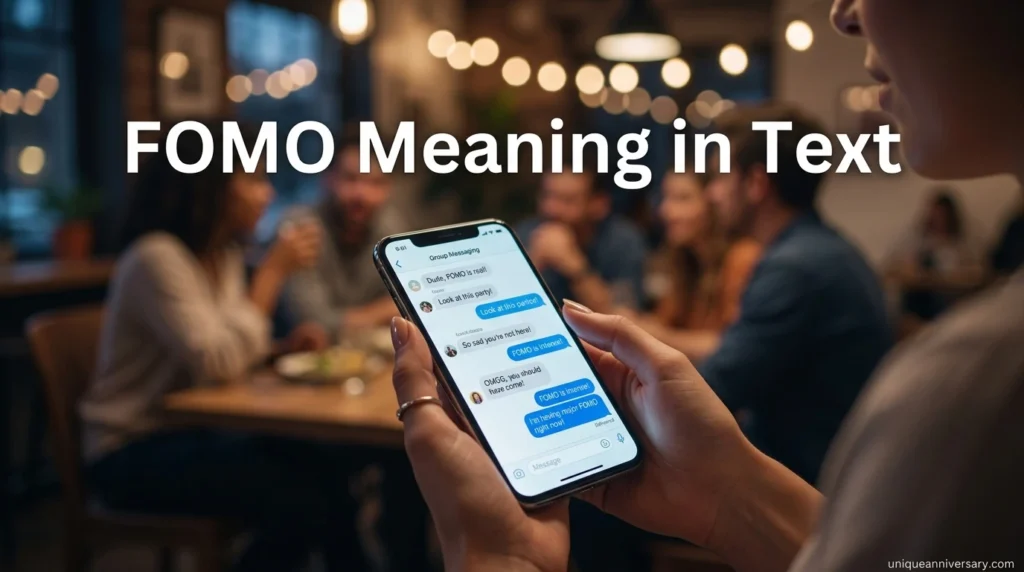
Have you ever scrolled through your phone late at night and suddenly felt like everyone else was living a more exciting life than you? A friend posts vacation pictures, someone shares a party clip, and another person announces a new achievement. Within seconds, a strange feeling creeps in—the fear that you are missing out on something important, exciting, or meaningful. That feeling has a name: FOMO.
In text messages, social media captions, online chats, and casual conversations, the term “FOMO” appears everywhere. People say things like, “I got major FOMO seeing those concert photos,” or “Don’t make me feel FOMO!” While it may seem like just another internet slang term, FOMO reflects something deeply human: the desire to belong, participate, and experience life fully.
Understanding the meaning of FOMO in text goes far beyond decoding an abbreviation. It reveals how modern communication affects emotions, relationships, confidence, and decision-making. Whether it appears in a funny meme, a serious conversation, or a social media post, FOMO often carries emotional weight beneath the humor. Exploring its meaning can help people better understand themselves, their habits, and the emotional impact of the digital world around them.
What Does FOMO Mean in Text?
FOMO stands for “Fear of Missing Out.” In texting and online communication, it describes the anxious or uncomfortable feeling that others are experiencing something enjoyable without you.
The term is commonly used in casual digital conversations. Someone might text:
- “You all went without me? I have serious FOMO now.”
- “These travel posts are giving me FOMO.”
- “I almost bought tickets because of FOMO.”
At its core, FOMO is emotional. It is not simply curiosity—it is the worry that missing an event, opportunity, trend, or social moment could leave you behind in some way.
The popularity of the phrase grew alongside social media platforms where people constantly share highlights of their lives. Unlike older generations who only heard stories after events happened, modern users witness moments in real time. Every notification, photo, and video can trigger comparison or feelings of exclusion.
Interestingly, FOMO is often used humorously in texts. Friends may exaggerate the feeling to sound dramatic or playful. Yet even when used casually, the emotion behind it can be very real. A person may laugh while typing “I’ve got FOMO,” but still feel lonely or disconnected underneath.
Understanding the phrase means recognizing both its casual internet use and its deeper emotional meaning in modern life.
Why FOMO Became So Popular Online
FOMO exploded in popularity because digital life constantly exposes people to what others are doing. Social media transformed everyday experiences into public performances.
Years ago, people only knew about events if someone told them later. Today, they watch parties, vacations, concerts, achievements, and celebrations unfold instantly on their screens. This constant visibility creates endless opportunities for comparison.
Imagine sitting at home on a Friday night while your phone lights up with videos of friends laughing at a restaurant. Even if you originally wanted a quiet evening, seeing others together may suddenly make you question your choice. That emotional shift is exactly why the term became so relatable online.
The word also became popular because it is short, memorable, and emotionally expressive. Internet culture loves abbreviations that quickly capture feelings. Much like “LOL” or “BRB,” FOMO communicates a complex emotion in just four letters.
Another reason for its popularity is that modern culture often glorifies busyness and excitement. People feel pressure to attend events, follow trends, and stay connected all the time. Missing something can feel like falling behind socially or emotionally.
As texting and social media became part of daily life, FOMO evolved from slang into a widely recognized emotional experience shared across generations.
The Emotional Psychology Behind FOMO
FOMO is deeply connected to human psychology. At its heart lies a basic emotional need: the desire to belong.
Humans naturally compare themselves with others. When people see others enjoying experiences they are not part of, their minds may interpret that absence as rejection or loss. Even when no harm is intended, the emotional response can still feel powerful.
The Fear of Exclusion
One major psychological factor behind FOMO is social exclusion. People want to feel included in groups, friendships, and communities. Seeing others gather without them may trigger insecurity or loneliness.
For example, someone might notice coworkers sharing lunch photos online. Even if they were simply unavailable that day, they may still wonder whether they are being left out intentionally.
Comparison Culture
Social media intensifies comparison because users mostly share positive moments. Rarely do people post boredom, disappointment, or loneliness. As a result, viewers compare their normal lives to carefully selected highlights.
This creates the illusion that everyone else is constantly happy, productive, and socially active.
Anxiety and Decision Pressure
FOMO also affects decision-making. A person may struggle to relax because they worry a better opportunity exists elsewhere. They may keep checking phones during conversations, wondering what they are missing online.
In this way, FOMO becomes more than slang—it reflects modern emotional pressure in a hyperconnected world.
How FOMO Is Used in Everyday Text Conversations
FOMO appears in many kinds of digital conversations, from playful jokes to serious emotional confessions. Context often determines whether the tone is lighthearted or genuine.
Casual and Funny Usage
Friends often use FOMO jokingly:
- “You guys got pizza without me? FOMO activated.”
- “Stop posting beach pictures. My FOMO can’t handle it.”
In these cases, the term adds humor and exaggeration to everyday situations.
Serious Emotional Usage
Sometimes, however, the word reflects deeper feelings:
- “Seeing everyone together gave me FOMO and honestly made me sad.”
- “I feel FOMO whenever I take a break from social media.”
Here, the person is expressing emotional discomfort rather than playful teasing.
Marketing and Advertising
Businesses also use FOMO in promotional messages. Limited-time sales, countdowns, and exclusive offers encourage people to act quickly because they fear missing an opportunity.
Messages like:
- “Only 2 hours left!”
- “Limited seats available!”
- “Everyone’s joining—don’t miss out!”
all rely on FOMO psychology.
Because the phrase is versatile, it fits naturally into modern texting culture while carrying emotional meaning that many people instantly understand.
Social Media’s Role in Creating FOMO
Social media is perhaps the biggest driver of FOMO today. Platforms are designed to keep users constantly updated on what others are doing.
Every scroll presents another opportunity for comparison:
- Friends traveling
- Influencers attending events
- Couples celebrating milestones
- People showing achievements or purchases
Even if someone feels content initially, repeated exposure to these highlights can slowly create dissatisfaction.
Highlight Reels vs Reality
One important truth about social media is that people rarely post ordinary moments. Most users share the best parts of their lives while hiding struggles, failures, or boredom.
A student posting smiling graduation photos may have spent months stressed and anxious beforehand. A traveler posting luxury pictures may have experienced exhaustion or financial pressure.
Yet viewers only see the polished outcome.
Endless Accessibility
Unlike television or magazines, social media never stops. Updates arrive every hour, making it difficult for people to mentally disconnect.
This constant access increases emotional pressure because users feel there is always something happening somewhere else.
The result is a cycle where people repeatedly check their phones, hoping not to miss experiences, trends, or conversations that others seem to enjoy.
FOMO in Friendships and Relationships
FOMO can strongly influence personal relationships. Sometimes it creates misunderstandings, insecurity, or emotional distance between people.
Imagine a teenager noticing photos of friends hanging out without them. Even if the gathering was spontaneous, they may begin wondering:
- “Why wasn’t I invited?”
- “Do they still like me?”
- “Am I being excluded?”
These thoughts can affect confidence and trust.
Romantic Relationships
FOMO also appears in dating. Someone may constantly compare their relationship to couples online who appear happier or more adventurous.
This comparison can create unrealistic expectations. A normal, healthy relationship may suddenly seem boring simply because social media showcases dramatic romantic moments.
Friendship Pressure
People may also attend events they do not truly enjoy simply to avoid feeling left out. They fear that missing one gathering could weaken friendships or social status.
Ironically, this pressure can reduce genuine happiness. Instead of participating because they truly want to, they act from anxiety about exclusion.
Healthy relationships usually involve understanding that people cannot attend everything. Real connection matters more than constant participation.
Different Types of FOMO People Experience
FOMO is not limited to parties or social gatherings. It appears in many areas of life.
Social FOMO
This is the most common form. It involves fear of missing social events, conversations, or shared experiences.
Career FOMO
Some people worry they are falling behind professionally. Seeing others receive promotions, launch businesses, or achieve success online may trigger anxiety about their own progress.
Travel FOMO
Travel culture online often creates pressure to constantly explore new places. Someone may feel their life is less meaningful because they are not traveling frequently.
Trend FOMO
This occurs when people feel pressured to follow viral trends, fashion, apps, or entertainment to stay culturally relevant.
Financial FOMO
Investing trends and online success stories sometimes create fear of missing money-making opportunities. People may make impulsive financial decisions because others appear successful.
Understanding these different forms helps people recognize that FOMO is broader than simple social anxiety. It can influence many life choices and emotional experiences.
The Difference Between FOMO and Genuine Desire
Not every strong interest is FOMO. Sometimes people genuinely want experiences because they align with personal values and goals.
The key difference lies in motivation.
Genuine Desire
A genuine desire comes from authentic interest. For example:
- Wanting to learn photography because it inspires creativity
- Traveling because exploration feels meaningful
- Joining an event because it sounds enjoyable personally
These choices feel fulfilling even without external validation.
FOMO-Driven Decisions
FOMO-driven choices usually come from comparison or pressure:
- Buying something because everyone else has it
- Attending events only to avoid exclusion
- Constantly checking trends to feel accepted
These actions often leave people emotionally drained rather than satisfied.
A useful question to ask is: “Would I still want this if nobody else knew about it?”
That question often reveals whether motivation comes from personal desire or fear of missing out.
Signs That FOMO May Be Affecting Your Life
Many people experience occasional FOMO, but constant fear of missing out can impact mental well-being.
Constant Phone Checking
One common sign is repeatedly checking social media, messages, or notifications during other activities.
Difficulty Enjoying the Present
A person experiencing FOMO may struggle to fully enjoy current moments because they are focused on what might be happening elsewhere.
Impulsive Decisions
FOMO can encourage rushed choices, such as:
- Overspending
- Overcommitting socially
- Joining trends without real interest
Emotional Exhaustion
Trying to keep up with everything can become mentally draining. People may feel anxious, dissatisfied, or emotionally overwhelmed.
Comparison-Based Self-Worth
Another warning sign is measuring personal value based on others’ visible experiences or achievements online.
Recognizing these patterns is important because awareness helps people regain control over emotional habits and digital behavior.
How FOMO Influences Modern Decision-Making
FOMO quietly shapes countless everyday decisions. From shopping habits to career moves, fear of missing out influences behavior more than many people realize.
Consider online shopping during a flash sale. A countdown timer appears, warning that the offer ends soon. Even if someone did not originally need the product, urgency creates emotional pressure.
The same happens socially. A person may attend multiple events in one weekend, not because they genuinely want to, but because they fear regret later.
Career and Productivity Choices
Professionally, FOMO can push people toward opportunities that look impressive externally but do not align with personal goals.
Someone may switch careers simply because peers appear successful in another field. Others constantly chase productivity trends, worried they are missing the “best” strategy for success.
Entertainment and Media Consumption
Streaming services, viral trends, and online discussions also fuel FOMO. People rush to watch shows or follow trends so they can participate in conversations.
While staying informed is natural, constant urgency can make life feel rushed and overwhelming.
Understanding how FOMO affects decisions helps people pause and ask whether choices are truly meaningful or simply reactions to external pressure.
Can FOMO Ever Be Positive?
Although FOMO often has negative associations, it is not always harmful. In some situations, it can motivate positive action.
For example, seeing friends exercise regularly may inspire someone to improve their health. Watching others pursue education or creative goals can encourage self-growth.
Motivation and Opportunity
Sometimes FOMO reminds people that life contains valuable experiences worth exploring. It can encourage:
- Trying new activities
- Building social connections
- Taking meaningful opportunities
- Breaking unhealthy routines
Awareness of Priorities
FOMO can also reveal hidden desires. If someone constantly feels left out of creative communities, perhaps they genuinely crave artistic expression or social belonging.
In this sense, the emotion becomes informative rather than destructive.
The Importance of Balance
The difference lies in balance. Healthy motivation encourages growth without harming mental well-being. Unhealthy FOMO creates anxiety, exhaustion, and constant comparison.
When approached mindfully, FOMO can become a signal pointing toward interests, goals, or connections that genuinely matter.
Practical Ways to Manage FOMO
Managing FOMO does not require abandoning technology completely. Instead, it involves building healthier emotional and digital habits.
Limit Comparison Triggers
Reducing excessive social media exposure can help create emotional space. Many people notice improved mood when they spend less time scrolling endlessly.
Focus on Real-Life Presence
Practicing presence matters. Enjoying current experiences fully often reduces anxiety about missing others.
For example, a quiet dinner with family may feel more meaningful when a person stops comparing it to glamorous online events.
Remember the Hidden Reality
It helps to remember that social media rarely reflects full reality. Behind every perfect photo may exist stress, boredom, insecurity, or struggle.
Choose Intentionally
Instead of saying yes to everything, people can ask:
- “Does this truly matter to me?”
- “Will this experience add value to my life?”
- “Am I acting from excitement or pressure?”
Intentional choices reduce emotional exhaustion and strengthen self-awareness.
Managing FOMO ultimately means learning that missing some experiences is a normal and healthy part of life.
The Rise of JOMO: The Joy of Missing Out
As awareness of digital stress grows, many people are embracing the opposite of FOMO: JOMO, or the Joy of Missing Out.
JOMO represents comfort with not participating in everything. Instead of feeling anxious about staying home, people intentionally enjoy rest, privacy, or slower living.
Imagine declining a crowded event to spend a peaceful evening reading, cooking, or relaxing without guilt. That feeling of contentment reflects JOMO.
Choosing Peace Over Pressure
JOMO encourages people to value quality over quantity. Rather than chasing endless experiences, they focus on meaningful ones.
This mindset often improves mental clarity and emotional well-being because it removes constant pressure to keep up.
Digital Boundaries
Many people practicing JOMO set healthier boundaries with technology:
- Turning off notifications
- Taking social media breaks
- Avoiding unnecessary comparison
Redefining Fulfillment
JOMO teaches that fulfillment does not come from doing everything. Sometimes the most meaningful moments happen quietly, away from public attention.
In a world obsessed with constant activity, finding peace in missing out can feel surprisingly freeing.
Why Understanding FOMO Matters Today
Understanding FOMO matters because modern life is increasingly digital, connected, and comparison-driven.
People today receive more social information in a single day than earlier generations encountered in weeks. Every notification has emotional potential. Without awareness, this environment can quietly shape confidence, happiness, and identity.
Learning about FOMO helps people become more emotionally conscious. Instead of automatically reacting to pressure, they can recognize the feeling and respond thoughtfully.
It also encourages empathy. Realizing that others experience similar insecurities creates understanding and compassion in friendships, families, and online communities.
Most importantly, understanding FOMO reminds people that no one can experience everything. Every choice naturally means missing another possibility. Accepting this reality creates emotional freedom.
Life becomes healthier when people stop chasing every trend and begin focusing on experiences that genuinely align with their values, goals, and happiness.
Conclusion
FOMO, meaning “Fear of Missing Out,” is far more than a trendy internet abbreviation. It reflects a deeply human emotional experience shaped by connection, comparison, and the desire to belong. In text messages and social media conversations, the term may appear playful, but beneath it often lies real emotional pressure created by modern digital life.
Understanding FOMO helps people recognize how technology, online culture, and social comparison influence emotions and decisions. It explains why seeing others’ experiences can sometimes trigger anxiety, insecurity, or dissatisfaction—even when life is going well.
At the same time, awareness creates balance. People can learn to separate genuine desires from comparison-driven pressure, build healthier digital habits, and appreciate the present moment more fully. Missing out on some experiences is not failure—it is a natural part of life. True fulfillment rarely comes from doing everything. It comes from intentionally choosing what truly matters and finding peace in those choices.
FAQs
What does FOMO mean in texting?
FOMO stands for “Fear of Missing Out.” In texting, it describes feeling anxious or left out because others are experiencing something exciting without you.
Is FOMO a real psychological feeling?
Yes. Although commonly used as internet slang, FOMO is connected to real emotions such as anxiety, comparison, insecurity, and the desire for social belonging.
Why does social media increase FOMO?
Social media constantly exposes people to curated highlights of others’ lives. Seeing these moments repeatedly can create comparison and feelings of exclusion.
Can FOMO affect mental health?
Yes. Excessive FOMO may contribute to stress, anxiety, low self-esteem, emotional exhaustion, and difficulty enjoying the present moment.
What is the opposite of FOMO?
The opposite is often called JOMO, which means “Joy of Missing Out.” It refers to feeling peaceful and content without needing to participate in everything.
How can I reduce FOMO in daily life?
You can reduce FOMO by limiting unnecessary comparison, spending less time scrolling social media, focusing on meaningful experiences, and practicing mindfulness.
Is FOMO always negative?
Not always. Sometimes FOMO can motivate people to try new opportunities, build relationships, or pursue personal growth. The key is maintaining balance.
Why do people joke about FOMO online?
People often use FOMO humorously because it is relatable. Even when used jokingly, the term still reflects a common emotional experience many people understand.