
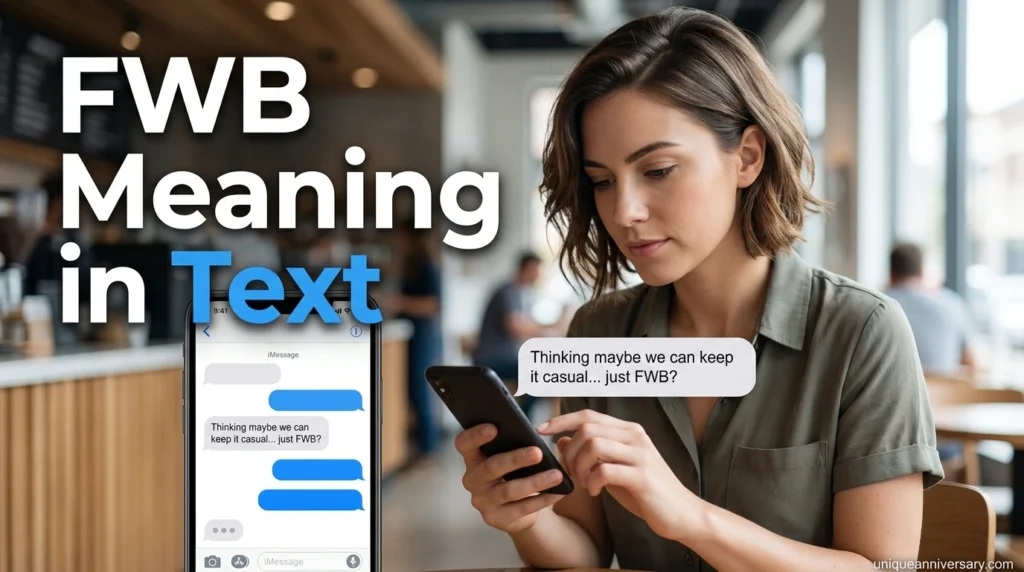
A late-night notification lights up your phone. Someone you’ve been talking to casually sends a message that says, “Maybe we should just stay FWB.” You pause for a second. You know the letters, or at least you think you do, but suddenly the meaning feels heavier than a simple abbreviation. Is it casual? Romantic? Risky? Comfortable? Confusing?
In today’s digital world, text abbreviations often carry emotional weight far beyond a few letters. “FWB” is one of the most commonly used relationship terms in texting culture, social media chats, dating apps, and online conversations. Yet many people misunderstand what it truly means or how complicated it can become in real life.
Understanding the phrase is important because it touches on friendship, intimacy, boundaries, expectations, and emotional connection. For some people, it represents freedom and simplicity. For others, it leads to confusion or heartbreak. The meaning often depends on communication, emotional maturity, and personal intentions.
This article explores the full meaning of “FWB” in text, how people use it, what it can look like in real situations, the emotional lessons behind it, and the misunderstandings that often surround it.
What Does FWB Mean in Text?
FWB stands for “Friends With Benefits.” In texting and online communication, it usually refers to two people who are friends and also share a physical or intimate relationship without officially dating.
The phrase is commonly used in casual conversations, dating apps, memes, and social media discussions. Someone might text:
- “We’re just FWB.”
- “Do you want an FWB situation?”
- “I don’t want a relationship, only FWB.”
At first glance, the meaning sounds simple. Two friends enjoy physical closeness without the commitment of a traditional romantic relationship. However, human emotions are rarely that straightforward.
The “friends” part suggests comfort, trust, and familiarity. The “benefits” part usually refers to physical intimacy. Together, the term describes a relationship that exists somewhere between friendship and dating.
For some people, FWB arrangements feel easy and drama-free. They appreciate companionship without emotional pressure. Others discover that emotions slowly grow deeper over time, creating tension and uncertainty.
In texting culture, abbreviations like FWB spread quickly because they summarize complicated relationship dynamics in just three letters. But behind those letters are real people navigating loneliness, attraction, connection, and personal boundaries.
Understanding the emotional context behind the term matters far more than simply memorizing the definition.
Why the Term FWB Became So Popular
Modern relationships have changed dramatically over the last decade. Dating apps, social media, and instant messaging created new ways for people to connect, flirt, and define relationships. In that environment, terms like FWB became extremely common.
Part of its popularity comes from flexibility. Many people feel uncertain about serious commitment but still desire companionship and intimacy. FWB arrangements seem to offer a middle ground between casual hookups and full relationships.
Another reason is convenience. Busy schedules, career goals, emotional baggage, or fear of commitment may lead people to avoid traditional dating structures. An FWB relationship can feel simpler because expectations appear lower.
The Influence of Digital Communication
Texting culture also played a huge role. Online conversations encourage shortcuts and labels. Instead of explaining complicated emotions, people use abbreviations like:
- FWB
- Situationship
- Talking stage
- BFF
- NSFW
These terms quickly become part of everyday language.
Movies, TV shows, and social media trends further normalized the concept. Many stories portray FWB arrangements as exciting, modern, and emotionally manageable. But real life often looks different from fictional portrayals.
People are emotionally complex. Even when two individuals agree to “keep things casual,” feelings can evolve unexpectedly.
The popularity of the term reflects modern dating culture’s growing focus on freedom, independence, and nontraditional relationship structures. Yet it also reveals how many people struggle to balance emotional connection with personal boundaries.
The Difference Between FWB and Dating
One of the biggest misunderstandings surrounding FWB relationships is the belief that they are basically the same as dating. In reality, there are important differences.
Traditional dating usually includes emotional commitment, long-term planning, exclusivity, and romantic expectations. FWB relationships, on the other hand, are typically designed to remain casual.
A dating relationship may involve:
- Meeting family
- Going on official dates
- Discussing the future
- Emotional commitment
- Romantic expectations
An FWB arrangement often focuses more on convenience, friendship, and physical intimacy without those deeper commitments.
Emotional Expectations Matter
The biggest difference is expectation. In dating, emotional closeness is usually encouraged. In FWB situations, emotional boundaries are often emphasized.
For example, two people dating might text constantly throughout the day and prioritize each other emotionally. In an FWB situation, communication may stay lighter and less emotionally intense.
However, real life rarely follows perfect rules. Sometimes FWB partners begin acting like a couple without officially labeling the relationship. This creates confusion because actions and labels stop matching.
Someone may think:
- “We spend all our time together.”
- “They act jealous.”
- “We talk every night.”
- “Why do they still call this casual?”
That emotional gray area is where many misunderstandings begin.
The distinction between dating and FWB depends less on physical intimacy and more on emotional intention and mutual understanding.
How People Usually Use FWB in Text Conversations
The way people use “FWB” in text messages often reveals their emotional intentions. Sometimes the term is used casually. Other times it becomes a serious conversation about relationship boundaries.
Here are a few common examples:
Casual Suggestion
Someone may text:
- “Would you ever do an FWB thing?”
- “I’m not looking for a relationship, just FWB.”
In this case, the person is usually being direct about wanting physical connection without romantic commitment.
Clarifying a Relationship
Sometimes people use the term to define an existing dynamic:
- “We’re basically FWB.”
- “I thought we agreed this was just FWB.”
This often happens when confusion begins developing between two people.
Avoiding Emotional Commitment
For some individuals, using the term creates emotional distance. It allows them to enjoy closeness while avoiding vulnerability or responsibility tied to traditional relationships.
Testing Emotional Interest
Interestingly, some people use “FWB” as a way to test emotional reactions. They may secretly want more but use casual language to protect themselves from rejection.
For example, a person might say:
- “Maybe we should stay FWB.”
But internally they may actually hope the other person responds with:
- “No, I want something real.”
This emotional complexity is why communication matters so much in these situations.
The term itself may seem simple, but the intention behind it can vary dramatically depending on the people involved.
The Emotional Side of Friends With Benefits
Many people enter FWB relationships believing emotions will stay separate from physical connection. Sometimes that happens. But often, emotions slowly become involved in unexpected ways.
Human attachment naturally grows through time, attention, trust, and intimacy. Even when two people agree to keep things casual, emotional bonds can still develop.
One person may begin feeling:
- Protective
- Jealous
- Emotionally attached
- Romantic
- Dependent
Meanwhile, the other person may still view the arrangement casually. This emotional imbalance is one of the most common reasons FWB situations become painful.
Why Feelings Sometimes Change
Physical intimacy can strengthen emotional closeness, especially when combined with friendship. Shared experiences, late-night conversations, emotional support, and consistency often deepen attachment naturally.
Someone may initially believe:
- “I can handle this casually.”
But later realize:
- “I actually care about them deeply.”
This shift is not weakness. It is simply human emotion evolving over time.
Another challenge is emotional ambiguity. When people act affectionate but avoid relationship labels, confusion grows. One person may interpret closeness as love while the other sees it as temporary comfort.
Healthy communication becomes essential in these situations. Without honesty, assumptions quickly replace understanding.
The emotional side of FWB relationships reminds us that people cannot always organize feelings into neat categories.
Signs an FWB Relationship Is Becoming More Serious
Sometimes an FWB arrangement slowly transforms into something emotionally deeper. The shift often happens gradually rather than suddenly.
At first, the relationship may seem purely casual. But certain behaviors reveal growing emotional attachment.
Increased Emotional Communication
If conversations become more personal, emotional, or frequent, the relationship may be evolving.
Examples include:
- Talking daily
- Sharing personal struggles
- Offering emotional reassurance
- Discussing future plans
Jealousy Appears
Jealousy is often a strong indicator that feelings are changing. If one person becomes upset about other romantic interests, emotional attachment may be developing.
Prioritizing Each Other
When someone consistently chooses the other person over friends, hobbies, or other dating options, the dynamic may no longer feel casual.
Acting Like a Couple
Sometimes people in FWB arrangements begin doing traditionally romantic activities:
- Going on dates
- Traveling together
- Celebrating birthdays
- Spending holidays together
At that point, labels and reality may no longer match.
The challenge is that both individuals may not experience the emotional shift equally. One person may quietly fall in love while the other remains emotionally detached.
This is why honest conversations are important before assumptions grow too strong.
Common Misunderstandings About FWB
FWB relationships are surrounded by myths and misunderstandings. Many people assume these arrangements are either completely harmless or automatically toxic. Reality is more nuanced.
“Nobody Catches Feelings”
This is one of the biggest misconceptions. Emotional attachment is extremely common in FWB situations. Humans naturally bond through repeated closeness and intimacy.
“FWB Means No Friendship”
Ironically, some FWB relationships lack genuine friendship altogether. Others involve deep emotional trust and companionship. The meaning varies widely between individuals.
“It’s Easier Than Dating”
Some people believe casual arrangements remove emotional complications. In reality, unclear expectations can create even more confusion than traditional relationships.
“FWB Always Becomes a Relationship”
Movies often portray FWB arrangements turning into love stories. While this can happen, many remain casual or eventually end without romance.
“There Are No Rules”
Healthy FWB situations usually require strong communication and boundaries. Without those discussions, misunderstandings become far more likely.
People often struggle because they enter these arrangements assuming both individuals secretly want the same thing. Unfortunately, assumptions rarely replace honest communication successfully.
The biggest misunderstanding is thinking labels alone define emotional reality. In truth, emotions develop through actions, experiences, and personal attachment—not simply through titles.
Healthy Boundaries in an FWB Arrangement
Boundaries are what determine whether an FWB situation remains emotionally manageable or becomes emotionally chaotic.
Without boundaries, confusion grows quickly. One person may assume emotional exclusivity while the other continues seeing multiple people. Misaligned expectations often lead to disappointment.
Communication Is Essential
Healthy FWB relationships usually involve direct conversations about:
- Emotional expectations
- Exclusivity
- Communication frequency
- Physical safety
- Future intentions
These discussions may feel awkward, but they prevent deeper misunderstandings later.
Knowing Personal Limits
Some individuals emotionally struggle with casual intimacy. Others manage it comfortably. Self-awareness matters.
Questions worth considering include:
- Can I separate intimacy from emotional attachment?
- Am I secretly hoping this becomes a relationship?
- Will I feel hurt if they date someone else?
Honest answers help protect emotional wellbeing.
Respect Matters
Even casual relationships require kindness and respect. Treating someone as emotionally disposable often causes lasting hurt.
Healthy boundaries include:
- Mutual honesty
- Respectful communication
- Emotional clarity
- Consent
- Consideration for feelings
FWB arrangements work best when both individuals clearly understand the situation and genuinely accept its boundaries without hidden expectations.
Why Some People Prefer FWB Relationships
Not everyone wants a traditional romantic relationship at every stage of life. For some people, FWB arrangements genuinely fit their emotional needs and lifestyle.
A person focused on career goals, personal healing, education, or independence may not feel ready for deep commitment. Yet they may still want companionship and physical closeness.
Fear of Emotional Vulnerability
Some individuals choose FWB situations because emotional commitment feels intimidating. Casual structures may seem emotionally safer.
Someone recovering from heartbreak might think:
- “I want connection, but I don’t want emotional risk.”
Desire for Freedom
Others value independence and flexibility. Traditional relationships sometimes feel emotionally demanding or restrictive to them.
FWB arrangements can offer:
- Less pressure
- Fewer obligations
- More personal freedom
- Simpler expectations
Different Life Stages
People experience relationships differently depending on age, maturity, and circumstances. What works for one person may not work for another.
Importantly, preferring an FWB arrangement does not automatically mean someone is emotionally immature or incapable of love. Sometimes it simply reflects their current priorities or emotional capacity.
The key issue is honesty. Problems usually arise when someone pretends to want casual connection while secretly hoping for emotional commitment.
When FWB Relationships Become Emotionally Difficult
Even well-intentioned arrangements can become emotionally painful over time. The difficulty often begins quietly.
One person starts waiting longer for replies. Another feels hurt seeing the other person flirt publicly. Jealousy appears. Expectations change silently.
Unequal Feelings
The most common emotional challenge is imbalance. One person develops stronger feelings while the other remains emotionally detached.
This creates emotional tension because the relationship no longer feels equal.
Mixed Signals
Confusion grows when actions contradict words.
For example:
- Someone says “This is casual”
- But acts emotionally possessive
- Wants constant attention
- Behaves romantically
Mixed signals make emotional clarity difficult.
Fear of Speaking Honestly
Sometimes people avoid discussing feelings because they fear ruining the arrangement. Instead of communicating openly, they suppress emotions until frustration builds.
Emotional Dependency
An FWB relationship can also become emotionally dependent without formal commitment. One person may rely heavily on the other for comfort, validation, or companionship while lacking relationship security.
These situations become emotionally exhausting because emotional needs exist without clear relational stability.
The emotional difficulty usually comes not from the label itself, but from unspoken expectations and unclear emotional boundaries.
How Social Media and Dating Apps Changed the Meaning
Technology significantly shaped how people understand and use terms like FWB.
Dating apps encourage quick connections and simplified labels. Instead of lengthy emotional discussions, people often summarize intentions with short phrases like:
- “Looking for FWB”
- “No serious relationship”
- “Casual only”
This creates faster communication but sometimes oversimplifies complex emotions.
The Influence of Online Culture
Social media also normalized discussing relationships publicly. Relationship labels became part of internet culture, memes, trends, and online identity.
As a result, many people casually use terms without fully understanding their emotional implications.
Instant Communication Creates Emotional Confusion
Texting can blur relationship boundaries. Constant messaging may create emotional intimacy even in casual arrangements.
For example:
- Daily good morning texts
- Emotional late-night conversations
- Sharing personal updates constantly
These behaviors often feel emotionally relationship-like, even when the label remains “FWB.”
Technology increased accessibility to casual connections but also amplified emotional ambiguity. People can stay constantly connected without clearly defining emotional expectations.
That emotional uncertainty is one reason modern relationship conversations often feel more complicated than previous generations experienced.
Lessons People Often Learn From FWB Experiences
Whether positive or painful, many people learn important emotional lessons from FWB relationships.
Communication Matters More Than Assumptions
One major lesson is the importance of honesty. Assuming two people feel the same without discussion often leads to misunderstanding.
Clear communication prevents emotional confusion.
Emotional Needs Should Be Acknowledged
Some people discover they genuinely desire emotional commitment more than they initially realized. Others learn they truly value independence.
FWB experiences often reveal deeper truths about personal emotional needs.
Boundaries Protect Emotional Health
People frequently realize that emotional boundaries are not restrictions—they are forms of emotional protection and clarity.
Labels Do Not Control Feelings
Perhaps the biggest lesson is that emotions rarely obey labels. Calling something “casual” does not automatically prevent emotional attachment.
Human connection naturally involves vulnerability, attachment, and emotional unpredictability.
For some individuals, FWB experiences lead to heartbreak. For others, they provide companionship and growth during certain life stages. Either way, these relationships often teach valuable lessons about communication, self-awareness, and emotional honesty.
Understanding What FWB May Represent Emotionally
Beyond its literal meaning, FWB often represents something deeper emotionally.
For some people, it reflects a desire for connection without pressure. For others, it symbolizes emotional caution, fear of vulnerability, or uncertainty about commitment.
Comfort Without Full Commitment
An FWB arrangement may provide emotional familiarity while avoiding the responsibilities of traditional relationships.
People sometimes seek:
- Comfort
- Physical affection
- Companionship
- Validation
Without wanting full romantic expectations.
Emotional Protection
Some individuals use casual relationship structures as emotional protection after painful experiences.
They may think:
- “If I don’t label it seriously, I can’t get hurt.”
Unfortunately, emotions do not always follow those protective rules.
A Reflection of Modern Dating Culture
FWB relationships also reflect broader cultural changes. Many people today navigate relationships differently than previous generations due to technology, independence, and shifting social expectations.
Ultimately, the meaning behind FWB depends less on the abbreviation itself and more on the emotional intentions, communication, and personal needs of the people involved.
Conclusion
The phrase “FWB meaning in text” may sound like a simple internet abbreviation, but behind those three letters lies a deeply human experience involving connection, boundaries, intimacy, and emotion. Friends With Benefits relationships can mean different things to different people depending on their intentions, emotional readiness, and communication style.
For some, these arrangements provide companionship without pressure. For others, they become emotionally complicated when feelings grow deeper than expected. The biggest factor separating healthy experiences from painful ones is honesty—both with the other person and with yourself.
Modern texting culture often compresses complicated emotions into short labels, but real relationships are rarely simple. Understanding what FWB truly means requires looking beyond the abbreviation and recognizing the emotional realities attached to it.
At its core, the term reminds us that human connection is nuanced, personal, and constantly evolving.
FAQs
What does FWB mean in texting?
FWB means “Friends With Benefits.” It refers to two people who are friends while also sharing physical or intimate involvement without a committed romantic relationship.
Is FWB the same as dating?
No. Dating usually includes emotional commitment, romantic expectations, and long-term intentions, while FWB arrangements are generally more casual.
Can people fall in love in an FWB relationship?
Yes. Emotional attachment can naturally develop over time, especially when friendship and physical intimacy are combined regularly.
Why do people choose FWB relationships?
People may choose FWB arrangements because they want companionship, physical connection, emotional comfort, or flexibility without traditional relationship pressure.
Are FWB relationships unhealthy?
Not necessarily. They can work well when both individuals communicate honestly, respect boundaries, and share similar expectations.
How do you know if an FWB relationship is becoming serious?
Signs include emotional attachment, jealousy, constant communication, romantic behavior, and prioritizing each other beyond casual interaction.
What is the biggest problem in FWB relationships?
The most common issue is unclear expectations. Emotional imbalance and poor communication often lead to confusion or hurt feelings.
Can an FWB relationship turn into a real relationship?
Yes, some FWB situations evolve into committed romantic relationships, though many remain casual or eventually end naturally.