
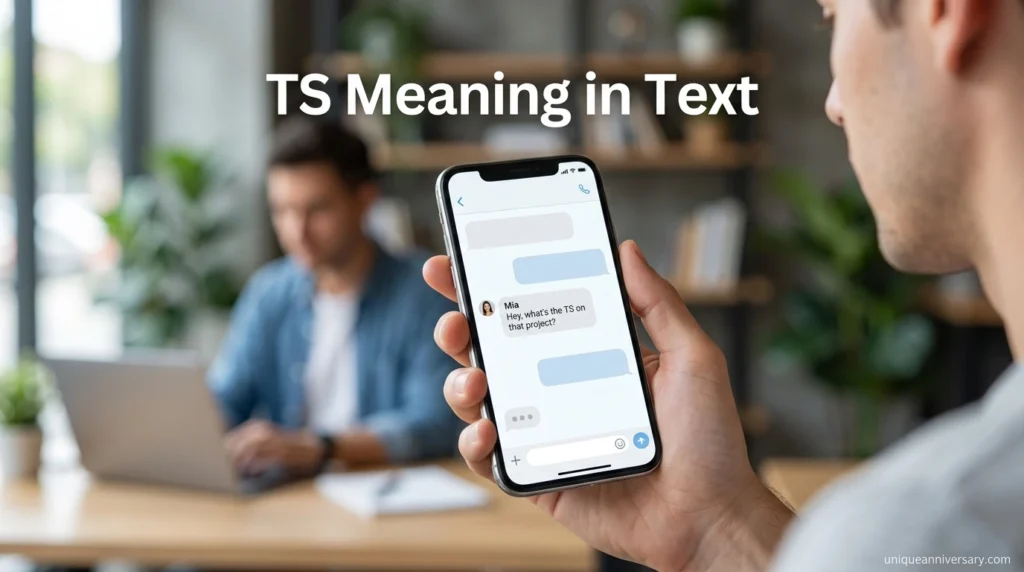
Have you ever opened a text message, scrolled through social media, or joined a fast-moving online conversation only to pause at two simple letters: “TS”? At first glance, it seems harmless and easy to ignore. But then curiosity kicks in. Does it mean something funny, serious, emotional, or completely different depending on the person using it?
Modern texting culture moves incredibly fast. Abbreviations appear overnight, spread through apps like TikTok, Snapchat, and Instagram, and suddenly become part of everyday conversations. “TS” is one of those abbreviations that can confuse people because it carries multiple meanings depending on tone, context, and relationship dynamics. One friend may use it casually in a joke, while another might use it during an emotional conversation.
Understanding what “TS” means in text matters more than people think. A misunderstanding can completely change the tone of a conversation. Learning these digital expressions also helps people communicate more confidently online, avoid awkward moments, and better understand modern internet culture. This guide explores the many meanings of “TS,” how people use it, what emotions it can carry, and how context changes everything.
The Basic Meaning of TS in Text
In texting, “TS” most commonly stands for “Talk Soon.” It’s usually used as a quick, casual way to end a conversation without sounding cold or distant. Instead of typing a full goodbye message, someone may simply write “TS” before leaving the chat.
For example:
- “I have class now, TS!”
- “Busy right now, TS later.”
- “Goodnight, TS tomorrow.”
In these situations, the phrase creates a feeling of continuation. The conversation is not truly ending; it is only paused. That small difference matters emotionally. Compare “bye” to “talk soon.” One sounds final, while the other suggests connection will continue.
Many people use shorthand expressions because texting culture values speed and convenience. Short abbreviations save time while still maintaining emotional warmth. “TS” works especially well between close friends, classmates, gaming buddies, or romantic partners who already understand each other’s communication style.
However, this abbreviation can become confusing because it has other meanings online. Someone unfamiliar with the context might misunderstand the message entirely. That’s why tone, relationship, and platform all matter when interpreting internet slang.
The simplicity of “TS” is exactly why it became popular. It delivers reassurance in just two letters.
Why Context Changes the Meaning of TS
One of the most interesting things about internet slang is that the same abbreviation can mean completely different things depending on the situation. “TS” is a perfect example of this.
Imagine receiving these messages:
- “TS after dinner.”
- “That movie was TS.”
- “TS is trending again online.”
Each sentence may point toward a different meaning. Without context, interpreting the message becomes difficult.
Digital communication removes facial expressions, tone of voice, and body language. Because of that, readers depend heavily on surrounding words to understand intent. A close friend may instantly recognize what “TS” means, while someone outside the conversation may feel lost.
Social Context Matters
A teenager on social media might use “TS” differently than a coworker in a professional text conversation. Online gaming communities, fandom spaces, and group chats often create their own meanings for abbreviations.
Emotional Context Matters
The emotional tone surrounding the message also changes interpretation. If someone says “TS” after an argument, it may feel distant. If they say it after a heartfelt conversation, it may sound comforting.
Platform Culture Matters
Different apps influence language differently. Expressions popular on X may not carry the same meaning on WhatsApp or gaming platforms.
Understanding context is the key to decoding modern texting language accurately. Two small letters can carry very different emotional meanings depending on where and how they appear.
TS as “Talk Soon” in Everyday Conversations
When people use “TS” to mean “Talk Soon,” the phrase often carries warmth and friendliness. It softens endings and keeps communication feeling open.
Picture two friends chatting late at night. One of them suddenly has to leave because of homework or family responsibilities. Instead of ending the conversation abruptly, they send:
“Gotta go now, TS!”
That tiny phrase creates emotional continuity. It reassures the other person that the relationship remains important.
Casual Friendships
Friends frequently use “TS” during busy days when conversations pause repeatedly. Modern texting often happens in fragments rather than long uninterrupted chats.
Romantic Conversations
In romantic contexts, “TS” can feel affectionate. It subtly says, “I want to continue talking with you later.” Even short phrases can carry emotional reassurance in relationships.
Professional but Friendly Usage
Some people also use “TS” in relaxed work conversations, though less commonly. For example:
“Heading into a meeting, TS afterward.”
The abbreviation feels casual yet polite.
What makes “Talk Soon” so effective is emotional efficiency. In only two letters, it communicates:
- Temporary goodbye
- Continued interest
- Friendly intent
- Future connection
That emotional shorthand explains why internet abbreviations spread so quickly. People naturally look for faster ways to express feelings without typing long explanations.
Other Popular Meanings of TS Online
Although “Talk Soon” is common, “TS” has several alternative meanings online. This is where confusion often begins.
Tough Situation
Some users write “TS” to mean “Tough Situation.” For example:
- “Losing your phone before vacation is TS.”
Here, the phrase expresses sympathy or acknowledgment of difficulty.
Taylor Swift Reference
Fans of Taylor Swift frequently shorten her name to “TS” in online fan communities. A message like:
- “TS dropped another surprise.”
would likely refer to the singer rather than “Talk Soon.”
TeamSpeak in Gaming
Gamers sometimes use “TS” to reference TeamSpeak, a voice communication platform.
Example:
- “Join TS before the match starts.”
True Story
In casual storytelling, “TS” may also mean “True Story.”
- “I accidentally texted my teacher instead of my friend. TS.”
This usage adds emphasis or authenticity.
These multiple meanings show how internet language evolves through communities. The same abbreviation becomes flexible and adapts to different social environments. That flexibility makes online communication creative but also occasionally confusing.
How Younger Generations Use TS Differently
Language evolves fastest among younger internet users. Teenagers and young adults constantly reshape abbreviations, slang, and texting habits to fit new trends.
For many younger users, abbreviations like “TS” are not just about saving time. They are part of identity and digital culture. Using the “right” slang can create belonging within online communities.
A high school student texting friends may casually use “TS” without ever explaining it because everyone in their social circle already understands the meaning. But older generations encountering the term for the first time might interpret it differently.
Speed and Informality
Younger users value quick communication. Typing full sentences can sometimes feel overly formal or emotionally intense.
Trend-Based Meanings
Platforms like TikTok rapidly spread new interpretations of slang. A phrase popular one month may disappear the next.
Humor and Irony
Sometimes abbreviations are used ironically or sarcastically. Someone might say:
- “TS I guess.”
with a joking or dramatic tone depending on the conversation.
This fluidity makes internet language fascinating. Meanings are shaped collectively by communities rather than formal dictionaries.
For anyone trying to understand modern texting culture, flexibility is essential. There is rarely just one fixed definition.
Emotional Tone Behind TS Messages
Words matter, but tone matters even more. The emotional feeling behind “TS” changes dramatically depending on how it is used.
Imagine these two messages:
- “Busy rn, TS.”
- “Fine. TS.”
The first feels friendly. The second may sound cold or dismissive.
Because texting lacks vocal tone, readers often interpret emotional meaning through punctuation, timing, and wording around abbreviations.
Warm and Caring Tone
Adding emojis or affectionate language changes the emotional effect:
- “Sleep well 😊 TS tomorrow!”
This feels comforting and positive.
Distant or Dry Tone
Short replies without emotional cues may seem uninterested:
- “TS.”
Even if no harm was intended, the message can appear abrupt.
Reassuring Tone
During emotional conversations, “TS” can provide comfort by signaling future communication:
- “I’m here if you need me. TS later.”
This creates emotional stability.
Understanding tone prevents unnecessary misunderstandings. Many online conflicts happen not because of what was said, but because of how people interpreted it emotionally.
Common Misunderstandings About TS
One of the biggest challenges with abbreviations is accidental confusion. Since “TS” has multiple meanings, misunderstandings happen frequently.
Imagine someone texting:
- “TS tonight.”
Does it mean “Talk Soon tonight”? A gaming session on TeamSpeak? Something else entirely?
Without context, interpretation becomes guesswork.
Generational Miscommunication
Older users unfamiliar with internet slang may misunderstand abbreviations completely. This sometimes creates awkward or humorous situations.
Relationship Misunderstandings
In emotional conversations, vague abbreviations can accidentally sound dismissive or uncaring. One person may intend friendliness while the other perceives distance.
Cultural Differences
Online slang differs across countries, communities, and age groups. An abbreviation popular in one space may be meaningless somewhere else.
The safest approach is simple: when confused, ask politely.
Most people appreciate clarification rather than assumptions. Digital communication becomes healthier when people focus on understanding instead of reacting immediately.
Abbreviations are useful tools, but clarity always matters more than speed.
TS in Social Media Culture
Social media changed language forever. Platforms reward speed, trends, and short-form communication, making abbreviations like “TS” increasingly common.
On apps like TikTok and Instagram, captions and comments move quickly. Users shorten phrases naturally to fit fast interactions.
Hashtags and Trends
Sometimes “TS” appears inside hashtags or trending topics connected to celebrities, memes, or fan discussions.
Comment Section Language
Social media comments encourage rapid emotional reactions. Short abbreviations become efficient tools for humor, excitement, or agreement.
Internet Identity
Online language also helps people feel connected to digital communities. Knowing popular abbreviations can create a sense of belonging.
A person unfamiliar with modern slang may feel disconnected when reading fast-moving comment sections. Meanwhile, frequent users interpret abbreviations instantly without effort.
This constant evolution explains why internet language changes so quickly. Social platforms accelerate communication trends at a global scale.
When You Should Avoid Using TS
Although abbreviations are convenient, there are situations where using “TS” may not be the best choice.
Professional Communication
In formal emails or workplace conversations, abbreviations can appear unprofessional or unclear. Writing “Talk soon” fully usually feels more polished.
Sensitive Conversations
If someone is upset, emotional clarity matters. A short abbreviation may accidentally seem emotionally detached.
For example:
- “TS.”
after a serious conversation could feel uncaring, even if the sender meant well.
New Relationships
People unfamiliar with your texting style may misunderstand abbreviations. Early communication benefits from clearer wording.
Cross-Generational Communication
Parents, teachers, or coworkers may not recognize slang meanings. Simpler language reduces confusion.
The best communicators adapt their language to the audience. Knowing when to use internet shorthand — and when not to — is an important social skill.
Real-Life Examples of TS in Conversations
Seeing abbreviations in realistic situations helps clarify meaning more effectively than simple definitions.
Friendly Conversation
Alex: “I have to leave for soccer practice.” Jordan: “Alright, TS later!”
This feels casual and friendly.
Romantic Chat
Maya: “I’m falling asleep.” Chris: “Goodnight ❤️ TS tomorrow.”
Here, the phrase carries warmth and affection.
Gaming Context
Player 1: “Join TS before the tournament.”
In this case, “TS” likely refers to TeamSpeak.
Fan Community
User Comment: “TS announced another album surprise.”
Fans would probably interpret this as a reference to Taylor Swift.
Emotional Misunderstanding
Emma: “I’m really stressed right now.” Ryan: “TS.”
Ryan may have intended “Talk Soon,” but the reply feels emotionally incomplete.
These examples show why surrounding context changes interpretation completely.
How Internet Slang Like TS Shapes Modern Communication
Internet slang is more than just laziness or shortened typing. It reflects how human communication adapts to technology.
People naturally seek faster, emotionally efficient ways to connect. Abbreviations compress meaning into tiny symbols while still carrying emotion, humor, or identity.
Emotional Efficiency
“TS” communicates future connection quickly. That emotional shortcut becomes valuable in fast-paced digital life.
Group Identity
Shared slang creates social belonging. Knowing specific abbreviations signals familiarity with online culture.
Language Evolution
Every generation reshapes communication. Just as previous generations created phone slang or shorthand letters, today’s users create digital abbreviations.
Interestingly, internet slang also reveals emotional habits. Many people prefer softer endings like “TS” because they reduce emotional distance.
Technology changes how people express feelings, friendships, and relationships. Abbreviations become part of that evolution.
Practical Tips for Understanding Text Abbreviations
Feeling confused by online slang is completely normal. Internet language changes constantly, even for regular users.
Focus on Context
Always read surrounding messages before interpreting abbreviations.
Consider the Platform
Gaming apps, fan communities, and casual texting spaces often use slang differently.
Notice Emotional Tone
Pay attention to punctuation, emojis, and conversation mood.
Ask When Unsure
Simple clarification prevents misunderstandings:
- “What does TS mean here?”
Avoid Overusing Slang
Using too many abbreviations can make communication unclear or emotionally distant.
Strong communication is not about using trendy language perfectly. It is about understanding people accurately and responding thoughtfully.
The Future of Abbreviations Like TS
Internet language will continue evolving as technology changes. New apps create new communication habits, and abbreviations constantly shift in meaning.
Some slang terms disappear quickly, while others become permanent parts of digital culture. Expressions like “LOL” survived for decades because they filled an emotional communication need. “TS” may continue evolving the same way.
Artificial intelligence, voice messaging, and video communication may eventually reduce reliance on abbreviations. Yet short-form texting remains deeply embedded in online culture.
Future generations will likely create entirely new shorthand expressions that feel confusing today, just as “TS” may confuse some readers now.
Language never stays still. That constant evolution reflects creativity, social trends, and human connection itself.
Understanding internet slang is not just about decoding words. It is about understanding how people relate to each other in a digital world.
Conclusion
The meaning of “TS” in text may seem simple at first, but its real significance depends entirely on context, tone, and community. Most commonly, it stands for “Talk Soon,” offering a warm and casual way to keep conversations open. However, online culture has expanded its meanings to include references to difficult situations, gaming platforms, celebrities, and more.
What makes “TS” fascinating is not just the abbreviation itself, but what it reveals about modern communication. People today value speed, emotional efficiency, and digital connection. Tiny phrases now carry emotional weight that once required full conversations.
Understanding abbreviations like “TS” helps people navigate online interactions more confidently and avoid unnecessary misunderstandings. More importantly, it reminds us that communication is never only about words. Tone, context, relationships, and emotion all shape meaning.
As internet language continues evolving, staying curious and adaptable will always matter more than memorizing every slang term.
FAQs
What does TS usually mean in text messages?
“TS” most commonly means “Talk Soon.” People use it as a friendly way to end conversations while suggesting they will continue chatting later.
Can TS have different meanings online?
Yes. Depending on the context, “TS” can also mean “Tough Situation,” “True Story,” reference Taylor Swift, or refer to TeamSpeak in gaming communities.
Is TS considered rude in texting?
Not usually. However, if used without emotional context or during serious conversations, it may seem cold or dismissive.
How can I know what TS means in a message?
Look at the surrounding conversation, emotional tone, and platform where it appears. Context is the biggest clue.
Do younger people use TS more often?
Yes. Younger internet users tend to use abbreviations more frequently because fast-paced texting culture encourages shorthand communication.
Should I use TS in professional communication?
It is generally better to avoid abbreviations like “TS” in formal or workplace communication unless you know the other person understands and uses similar casual language.
Why do internet abbreviations become popular?
They save time, create group identity, and help people communicate emotions quickly in fast digital conversations.
Is TS popular on social media?
Yes. Platforms like TikTok, Instagram, and Snapchat frequently spread abbreviations and online slang trends.