
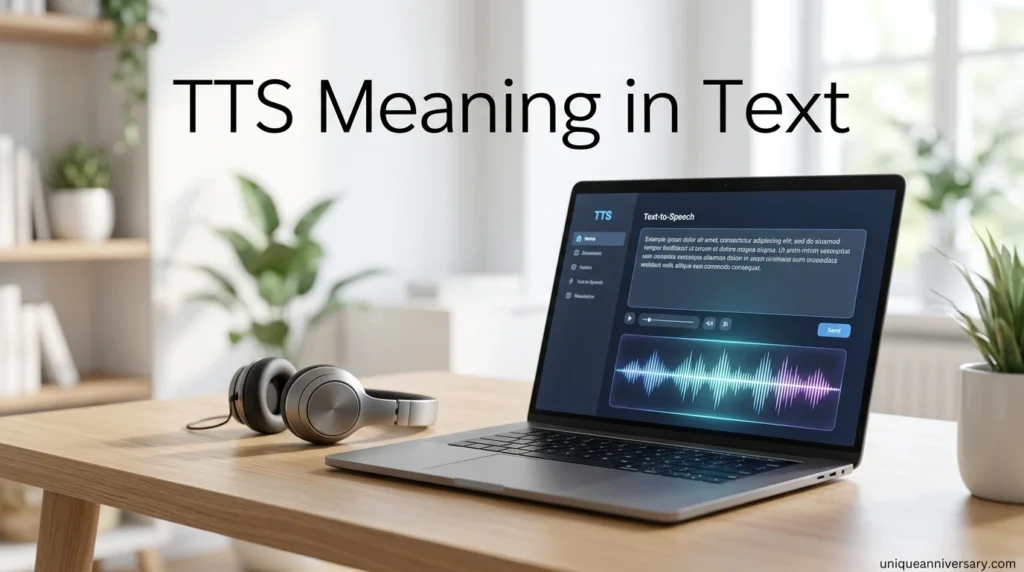
Have you ever opened a text message, paused for a second, and wondered what a short abbreviation actually meant? Maybe a friend replied with “TTS later,” or you spotted “TTS” in a gaming chat, social media caption, or online conversation. In a world where digital communication moves faster than ever, tiny acronyms can suddenly carry huge meaning. One short phrase can save time, express emotion, or completely change the tone of a conversation.
That is exactly why understanding the TTS meaning in text matters. Online slang and texting abbreviations are now part of everyday communication. From casual conversations between friends to gaming communities, TikTok comments, business chats, and accessibility tools, “TTS” can mean different things depending on the context. Sometimes it refers to “Text-to-Speech,” while in other situations it means “Talk To Soon.”
The challenge is that many people misunderstand it because the internet rarely stops to explain itself. This article explores the deeper meaning of TTS, how people actually use it, the emotions behind it, common misunderstandings, and how you can confidently recognize its meaning in real-life conversations.
Understanding the Core TTS Meaning in Text
The TTS meaning in text usually depends on the platform and the situation. Most commonly, it stands for either “Text-to-Speech” or “Talk To Soon.” These two meanings may seem unrelated, but both are widely used online.
Imagine receiving a message from a friend saying, “Busy right now, TTS.” In this case, the abbreviation probably means “Talk To Soon.” It acts like a warm goodbye without sounding overly formal. Instead of typing a full sentence, people shorten it to keep the conversation quick and natural.
Now picture someone posting, “I used TTS for my video narration.” Here, the meaning changes completely. In this context, TTS refers to “Text-to-Speech,” a technology that converts written words into spoken audio.
This dual meaning explains why people sometimes get confused. Context becomes everything. The surrounding words, platform, and tone help determine what the sender truly means.
Digital communication has trained people to communicate quickly. Acronyms like TTS save time while also creating a sense of belonging within online culture. Once you understand how context shapes meaning, reading modern messages becomes far easier and less intimidating.
Why Texting Acronyms Like TTS Became So Popular
Online communication is built around speed. People text while walking, eating, studying, gaming, or multitasking at work. Because of this, abbreviations naturally became part of digital culture.
Years ago, texting had character limits and slower typing experiences. Acronyms such as LOL, BRB, IMO, and TTS emerged as shortcuts. Over time, they evolved into a kind of digital language.
Faster Conversations
Typing “Talk To Soon” every single time may not seem difficult, but in rapid conversations, shortening phrases feels more natural. Small abbreviations keep conversations moving smoothly.
Emotional Convenience
Acronyms also soften communication. Saying “TTS” can feel casual and comforting rather than abrupt. It gives the impression that the connection will continue later.
Community and Belonging
Internet slang often creates a shared culture. When people understand terms like TTS, they feel more connected to online communities, gaming groups, or social media spaces.
Interestingly, acronyms also reflect changing communication habits. Modern conversations often value speed and emotional efficiency. A three-letter abbreviation can now carry reassurance, friendliness, or technical meaning depending on how it is used.
The popularity of TTS shows how language constantly adapts to human behavior and technology.
TTS as “Talk To Soon” in Everyday Messaging
One of the most personal uses of TTS is as “Talk To Soon.” This meaning appears mostly in casual texting between friends, family members, coworkers, or romantic partners.
Imagine a late-night conversation where someone says:
“Getting tired. TTS tomorrow!”
That tiny phrase quietly communicates warmth, continuation, and emotional connection. It avoids sounding cold or dismissive.
Why People Use It
People often choose TTS because it feels lighter than saying goodbye formally. It keeps the conversation open-ended rather than final.
For example:
- “Heading into class, TTS!”
- “Busy right now, but TTS later.”
- “Need sleep. TTS tomorrow ❤️”
These examples show how flexible the phrase can be.
Emotional Subtlety Behind TTS
There is also a subtle emotional layer hidden inside “Talk To Soon.” It suggests the relationship matters enough to continue. Even in short conversations, people want reassurance that communication is not ending permanently.
This is especially common in long-distance friendships or relationships where texting acts as a primary form of connection.
When It Sounds Natural
TTS works best in informal conversations. Using it in professional emails might seem confusing or too casual unless the relationship already has a relaxed tone.
The simplicity of the phrase is part of its charm. Three letters quietly say, “This conversation matters, and we’ll continue it later.”
TTS as “Text-to-Speech” and Why It Matters
The second major TTS meaning in text refers to “Text-to-Speech.” This is a technology that converts written text into spoken words using artificial voices.
You may already interact with TTS daily without realizing it.
Voice assistants, navigation systems, accessibility tools, TikTok narrations, YouTube voiceovers, and automated reading apps all rely on text-to-speech technology.
How Text-to-Speech Works
A TTS system analyzes written language and generates speech using programmed voice patterns. Modern systems sound increasingly natural and human-like.
For example:
- GPS directions speaking aloud
- AI narrators reading articles
- TikTok robotic voiceovers
- Accessibility readers for visually impaired users
Why It Became So Important
Text-to-speech technology changed digital accessibility dramatically. People with reading difficulties, visual impairments, or learning challenges can now access information more independently.
Students also use TTS tools to study while multitasking. Someone commuting to work may listen to articles instead of reading them.
Social Media and TTS
Platforms like TikTok made TTS culturally recognizable. The signature AI narration style became part of internet humor and storytelling.
Creators discovered that automated voices added personality, comedy, and convenience to short videos.
In this sense, TTS is no longer just technology. It has become part of online creativity and communication culture.
How Context Changes the Meaning of TTS
One reason people struggle with the TTS meaning in text is because both meanings are widely used online. Understanding context becomes the key to decoding it correctly.
Consider these examples:
- “TTS tomorrow!” → likely “Talk To Soon”
- “This app has amazing TTS features.” → likely “Text-to-Speech”
The surrounding conversation usually provides clues.
Platform Differences
Different online spaces favor different meanings.
In Messaging Apps
WhatsApp, Snapchat, and personal texts commonly use TTS as “Talk To Soon.”
In Tech Discussions
Gaming forums, AI communities, accessibility discussions, and app reviews usually mean “Text-to-Speech.”
On Social Media
TikTok and YouTube often use TTS when discussing AI voice narration.
Tone Helps Too
Emotional tone can reveal meaning quickly.
A warm, personal message probably means “Talk To Soon.”
A technical or instructional sentence probably refers to speech software.
Learning online slang is similar to learning body language in real life. Words alone do not always explain everything. Tone, environment, and context shape interpretation.
Common Situations Where You Might See TTS
TTS appears in far more places than most people realize. Once you recognize it, you start noticing it everywhere online.
Casual Friend Conversations
Friends often use TTS while ending conversations casually:
- “Dinner time, TTS!”
- “Phone dying, TTS later.”
Gaming Communities
Gamers may use TTS in both ways:
- “Need to log off, TTS tomorrow.”
- “The game’s TTS voice settings are broken.”
Gaming culture blends social chatting with technology discussions, making dual meanings especially common.
Social Media Videos
TikTok creators frequently mention TTS tools for narration:
- “I used a TTS generator for this story.”
Accessibility and Education
Schools and apps use text-to-speech systems for learning support. Students with dyslexia or reading challenges often rely on TTS tools to process information more comfortably.
Workplace Communication
While less common professionally, some teams use TTS casually in internal chats:
- “Jumping into a meeting, TTS.”
These everyday examples show how flexible and adaptable the abbreviation has become.
Emotional Meaning Hidden Behind Short Text Abbreviations
At first glance, acronyms can seem emotionally empty. But in reality, short text expressions often carry subtle emotional signals.
“TTS” is a perfect example.
When someone says “Talk To Soon,” they are not just ending a conversation. They are maintaining connection. The phrase softens separation and implies continued interest.
Digital Warmth
Modern communication lacks facial expressions and voice tone. Because of this, people use abbreviations, emojis, and slang to recreate emotional warmth.
“TTS ❤️” feels different from simply disappearing from the conversation.
Avoiding Awkward Endings
Many people dislike abrupt goodbyes. TTS creates a smoother emotional transition.
It quietly says:
- “I still care.”
- “This conversation matters.”
- “We’ll reconnect later.”
Emotional Efficiency
Today’s digital world values quick communication, but humans still need emotional reassurance. Abbreviations allow people to express connection efficiently.
This explains why texting slang continues evolving rather than disappearing. Even short phrases fulfill emotional needs.
Misunderstandings People Have About TTS
Because TTS has multiple meanings, misunderstandings happen regularly online.
Someone discussing AI narration may confuse a person who only knows the “Talk To Soon” meaning. Likewise, a casual texter may accidentally sound technical without realizing it.
Assuming Only One Meaning Exists
Many people learn one version of TTS and assume it never changes. But internet language is fluid and context-dependent.
Confusion Across Generations
Younger users who spend time on TikTok may instantly recognize “Text-to-Speech,” while older texters may interpret it as “Talk To Soon.”
Misreading Tone
A technical conversation can suddenly sound emotional if TTS is misunderstood.
For example:
“This platform has advanced TTS.”
Someone unfamiliar with text-to-speech technology might incorrectly interpret the sentence emotionally.
Why Clarification Matters
When uncertain, asking for clarification is perfectly normal. Internet slang evolves rapidly, and no one understands every abbreviation immediately.
Communication works best when people prioritize understanding over assumptions.
The Role of TTS in Social Media Culture
Social media transformed TTS from a simple abbreviation into a recognizable internet trend.
TikTok especially helped popularize text-to-speech voices through storytelling videos, comedy skits, reaction clips, and narrated confessions.
Why Creators Love TTS Voices
Many creators use TTS narration because:
- It saves recording time
- It protects privacy
- It adds humor
- It creates a recognizable aesthetic
The robotic voice itself became part of internet culture.
Storytelling Through AI Voices
Some creators discovered that emotionally dramatic stories sounded oddly entertaining when read by robotic voices. This contrast created a unique form of humor and engagement.
Accessibility Benefits
TTS also improved accessibility on social platforms. Voice narration helps users consume content while multitasking or when reading text is difficult.
Changing the Way People Create Content
Years ago, creators relied heavily on microphones and editing software. Now someone can type a story and instantly generate narration using TTS tools.
This lowered the barrier to content creation and encouraged more people to share ideas online.
How TTS Technology Impacts Everyday Life
Text-to-speech technology is no longer futuristic. It quietly shapes daily life in ways many people barely notice.
Navigation and Travel
GPS systems guide drivers using TTS voices every day. Without spoken directions, navigation would require constant screen checking.
Learning and Productivity
Students use TTS readers to review notes while walking or exercising. Busy professionals listen to reports during commutes.
Accessibility and Inclusion
For visually impaired individuals, TTS creates independence. It allows access to books, websites, and digital communication more easily.
Language Learning
Hearing words spoken aloud helps learners improve pronunciation and comprehension.
Smart Devices
Voice assistants in homes use TTS constantly. From weather updates to reminders, synthetic speech became integrated into modern routines.
The rise of TTS technology reflects humanity’s desire for communication that feels faster, easier, and more accessible.
Practical Tips for Understanding Text Abbreviations Like TTS
Online language changes quickly, but understanding abbreviations becomes easier with practice.
Look at the Full Conversation
Never interpret slang in isolation. Surrounding sentences usually reveal meaning naturally.
Consider the Platform
Social apps, gaming spaces, and technical discussions each develop different slang habits.
Pay Attention to Tone
Warm, emotional messages usually point toward “Talk To Soon.” Technical conversations usually indicate “Text-to-Speech.”
Don’t Fear Asking Questions
Even experienced internet users encounter unfamiliar abbreviations. Asking politely prevents misunderstandings.
Learn Gradually
Nobody memorizes all internet slang overnight. Language evolves continuously, and familiarity grows through exposure.
Understanding abbreviations is less about memorization and more about recognizing communication patterns.
Why Internet Language Keeps Evolving
The story of TTS reflects something bigger: language constantly adapts to human needs.
Digital communication changed how people interact. Conversations became shorter, faster, and more visually driven.
Technology Shapes Language
New platforms create new communication habits. Every social app influences how people write and speak online.
Emotional Expression Changes Too
People continuously invent new ways to express humor, affection, sarcasm, and identity digitally.
Internet Culture Moves Fast
An abbreviation can become globally popular within weeks thanks to memes, videos, and viral trends.
Human Creativity Never Stops
Even though acronyms simplify language, they also show creativity. People reshape communication to fit modern lifestyles.
TTS is just one small example of how technology and human behavior influence each other constantly.
The Difference Between Slang Understanding and Real Communication
Knowing the TTS meaning in text is helpful, but true communication goes deeper than decoding abbreviations.
Understanding someone’s intention matters more than simply translating words.
For example:
“TTS ❤️”
The literal meaning is simple, but emotionally it may communicate affection, reassurance, or care.
Communication Is More Than Vocabulary
People interpret tone, timing, emojis, and context together. Digital conversations rely heavily on subtle signals.
Why Misunderstandings Happen Easily
Without facial expressions or voice tone, online messages can feel ambiguous. Small abbreviations may accidentally create confusion.
Slang Reflects Human Connection
Internet shorthand exists because people still crave efficient but meaningful interaction.
Even quick phrases like TTS reveal emotional needs:
- reassurance
- continuation
- connection
- convenience
Recognizing these deeper layers improves communication far more than memorizing acronyms alone.
How to Use TTS Naturally in Your Own Conversations
If you want to use TTS confidently, simplicity is best.
Casual Friendly Use
“TTS later!” “Busy right now, TTS tomorrow.” “Need sleep 😴 TTS!”
These feel natural in relaxed conversations.
Avoid Overusing It
Not everyone recognizes every abbreviation. In formal settings, clearer language is usually better.
Use Context Carefully
If discussing technology, make it obvious whether you mean text-to-speech.
For example:
- “This app’s TTS voice sounds realistic.”
- “TTS tomorrow after class!”
Small clarifications prevent confusion.
Match the Tone
Use abbreviations only when they fit the relationship and environment. Friendly chats work well; professional emails usually do not.
Like all internet slang, TTS works best when it feels effortless rather than forced.
Conclusion
The TTS meaning in text may appear simple at first, but it actually reflects the fascinating evolution of modern communication. Whether it means “Talk To Soon” in a heartfelt conversation or “Text-to-Speech” in a technology discussion, the abbreviation shows how digital language adapts to human needs for speed, convenience, creativity, and connection.
Understanding TTS is not just about memorizing internet slang. It is about recognizing context, tone, emotion, and the way people communicate online today. From casual texting and gaming chats to accessibility tools and viral social media videos, TTS has become part of everyday digital culture.
As online language continues changing, abbreviations like TTS remind us that even the shortest messages can carry meaning, emotion, and intention. The more we understand these evolving communication styles, the easier it becomes to connect clearly and confidently in the digital world.
FAQs
What does TTS mean in text messages?
In text messages, TTS most commonly means “Talk To Soon.” People use it as a casual and friendly way to end conversations while suggesting they will continue talking later.
What does TTS stand for in technology?
In technology, TTS stands for “Text-to-Speech.” It refers to software or systems that convert written text into spoken audio using computer-generated voices.
How do I know which TTS meaning someone is using?
Context is the biggest clue. Casual conversations usually mean “Talk To Soon,” while technical discussions, social media narration, or accessibility topics usually refer to “Text-to-Speech.”
Is TTS commonly used on TikTok?
Yes. TikTok popularized text-to-speech voices through narrated videos, storytelling clips, memes, and comedic content using AI-generated voice narration.
Can TTS be used in professional communication?
“TTS” as “Talk To Soon” is generally too casual for formal emails or business communication. However, “Text-to-Speech” is commonly discussed professionally in tech, education, and accessibility fields.
Why do people use abbreviations like TTS?
People use abbreviations to save time, communicate quickly, and create smoother conversations. Acronyms also help express emotion and familiarity in digital communication.
Is TTS only used by younger people?
No. While younger users may use it more frequently on social media, people of many age groups encounter or use TTS in texting, gaming, work tools, and accessibility technology.
Does TTS always mean the same thing online?
No. TTS can have multiple meanings depending on the platform, conversation, and context. That is why understanding surrounding words and tone is important.