
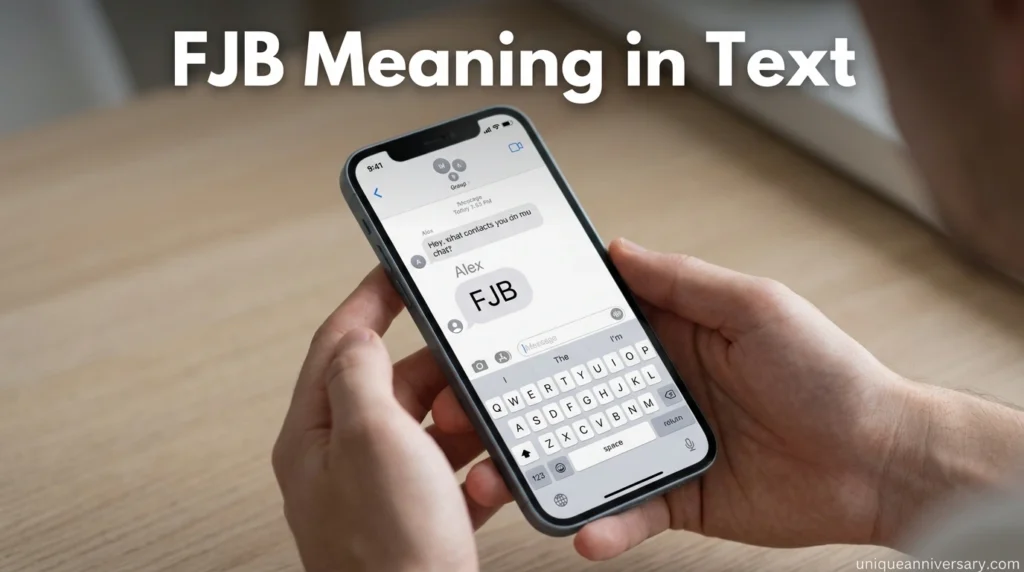
Picture this: you’re scrolling through social media late at night, casually reading comments under a viral video, when someone suddenly types, “FJB!” At first glance, it looks like just another random internet abbreviation. Maybe it’s a gamer code, a meme, or a harmless inside joke. But then you notice people reacting strongly—some laughing, some agreeing passionately, and others clearly offended. Suddenly, those three letters seem much bigger than they first appeared.
In today’s digital world, short acronyms often carry surprisingly deep emotional, political, and cultural meanings. The phrase “FJB” is one of those examples. It’s more than simple internet slang; it reflects frustration, identity, online culture, and modern communication trends. Whether you’ve seen it in text messages, comment sections, memes, political discussions, or social media captions, understanding the meaning behind it can help you better interpret conversations online and avoid misunderstandings.
This article explores the full meaning of “FJB” in text, where it came from, why people use it, how it’s interpreted in different settings, and what it reveals about internet communication today. By the end, you’ll understand not only the phrase itself but also the emotions and social dynamics behind it.
What Does FJB Mean in Text?
The acronym “FJB” commonly stands for “F*** Joe Biden.” It is a political slang expression used primarily online, in text messages, social media comments, memes, and casual conversations. The phrase is often used by individuals expressing criticism, frustration, or opposition toward U.S. President Joe Biden.
Although the abbreviation is short, it carries a strong emotional tone. Many people use it to quickly communicate political dissatisfaction without writing the full phrase. Others use it humorously, sarcastically, or as part of internet meme culture.
The rise of abbreviations like FJB reflects how online communication has evolved. People often shorten emotionally charged phrases into compact forms that spread rapidly across platforms like TikTok, X, Facebook, Instagram, and YouTube comments.
For some users, FJB represents political identity. For others, it’s simply trendy internet slang they repeat without deeply analyzing its meaning. Context matters heavily. A political discussion, meme page, or sports comment section may all use the acronym differently.
Understanding the emotional weight behind the term helps avoid confusion. While some see it as free expression or humor, others view it as disrespectful or divisive. That difference in interpretation explains why the acronym often sparks strong reactions online.
The Origin of the FJB Phrase
The popularity of “FJB” exploded after the viral “Let’s Go Brandon” trend that emerged in 2021. During a televised NASCAR interview, a crowd in the background was chanting an anti-Biden slogan. However, the reporter suggested the crowd was chanting “Let’s Go Brandon.”
That moment quickly became internet history.
People online transformed the phrase into a coded political slogan. Soon afterward, “FJB” emerged as an even shorter and more direct variation. It spread rapidly across social media because it was quick to type, easy to recognize, and emotionally charged.
How Internet Culture Amplified It
The internet thrives on repetition, humor, and symbolic language. Acronyms gain traction because they are easy to share in comments, hashtags, memes, and usernames.
FJB became popular because it combined several things:
- Political frustration
- Meme culture
- Internet shorthand
- Group identity
- Emotional expression
People began printing it on hats, shirts, bumper stickers, and social media bios. In many cases, the acronym became more recognizable than the full phrase itself.
Why Abbreviations Spread So Quickly
Modern communication rewards speed. Instead of writing long opinions, users prefer compact expressions. Acronyms save time while still conveying emotion and identity.
That’s one reason FJB became so widespread online within a short period.
Why People Use FJB in Online Conversations
Not everyone uses FJB for the same reason. Understanding the motivations behind it provides a more complete picture of the phrase.
Some people use it seriously as a political statement. Others use it casually as internet humor. In many situations, the acronym acts almost like a digital emotional shortcut.
For example, someone frustrated about inflation, gas prices, or political decisions may type “FJB” under a news post to express dissatisfaction instantly. Another person might use it jokingly among friends who share similar political views.
The phrase can also create a sense of belonging. Online communities often form around shared opinions, and abbreviations become symbolic “group language.” Using the acronym signals alignment with a certain viewpoint or community.
At the same time, some users type it without fully understanding the political implications. Internet culture often spreads phrases faster than people research them.
This creates an interesting phenomenon where acronyms become cultural symbols rather than just literal statements.
The Emotional Tone Behind FJB
Language online is rarely neutral. Even short abbreviations carry emotional energy, and FJB is no exception.
For many users, the acronym expresses frustration, anger, disappointment, or political exhaustion. It becomes an outlet for emotions people may feel unable to express in longer conversations.
Imagine someone struggling financially while constantly seeing political debates online. Typing three letters may feel easier than writing an entire explanation of their frustrations.
Anger and Digital Expression
Social media encourages instant emotional reactions. Acronyms allow users to respond quickly without lengthy discussion.
FJB functions almost like emotional shorthand:
- Frustration becomes compressed into letters
- Political criticism becomes symbolic
- Personal feelings become public signals
Humor and Sarcasm
Not every use is intensely serious. Some people use the phrase ironically or humorously. Internet meme culture often transforms serious political phrases into jokes, trends, or exaggerated reactions.
This blend of humor and hostility is part of why internet slang can sometimes feel confusing or emotionally layered.
How FJB Is Used on Social Media
Different platforms shape language differently, and FJB appears in many forms depending on where it’s posted.
On X or TikTok, it may appear in hashtags or meme captions. On Facebook, it often appears in political discussions. In text messages, it might be used between friends discussing current events.
Common Examples of Usage
Here are a few realistic scenarios:
Political Commentary
“Gas prices went up again. FJB.”
Meme Humor
A funny edited video with “FJB energy” written in the caption.
Group Identity
Users placing “FJB” in usernames, bios, or profile pictures to signal political beliefs.
Casual Conversation
Friend 1: “Did you watch the debate?” Friend 2: “Yeah… FJB.”
Each example shows how context changes interpretation. Sometimes it’s serious criticism. Other times it’s sarcasm, humor, or emotional venting.
Misunderstandings About FJB Meaning
One reason people search for “FJB meaning in text” is because the acronym is not always obvious to new internet users.
Someone unfamiliar with political slang may assume it means:
- A gaming term
- A fandom abbreviation
- A meme reference
- A random internet code
Without context, internet acronyms can feel impossible to decode.
Another misunderstanding comes from tone. Some people assume every use of FJB is deeply aggressive, while others treat it casually. The meaning often depends on the speaker’s intent and the environment where it appears.
A teenager reposting a meme may not carry the same emotional intensity as someone angrily using it during a political debate.
This highlights an important truth about internet communication: context matters just as much as vocabulary.
Political Language and Internet Identity
Online language often becomes tied to identity. Acronyms like FJB are not just phrases—they become symbols representing beliefs, frustrations, communities, and values.
People frequently use digital language to show where they stand socially or politically. Just as sports fans wear team jerseys, internet users adopt slogans, hashtags, and acronyms to signal identity.
Why Symbolic Language Matters
Humans naturally seek belonging. Shared phrases help people feel connected to others who think similarly.
In online spaces:
- Memes create community
- Slang builds familiarity
- Acronyms simplify group communication
FJB functions as one of these identity markers in certain online communities.
The Risk of Division
At the same time, symbolic political language can deepen polarization. Short slogans often simplify complex issues into emotional reactions, which may reduce meaningful discussion.
That’s why acronyms can sometimes intensify arguments online instead of encouraging thoughtful conversation.
How Internet Slang Evolves Over Time
The story of FJB also reflects a larger trend: internet slang evolves incredibly fast.
A phrase can begin as a joke, become a viral meme, transform into political symbolism, and eventually enter mainstream culture within months.
Think about how quickly modern slang spreads:
- TikTok trends
- Meme captions
- Viral hashtags
- Influencer phrases
- Gaming slang
FJB followed this same pattern.
The Lifecycle of Online Acronyms
Most internet abbreviations go through stages:
- Creation
- Viral spread
- Cultural recognition
- Mainstream use
- Decline or transformation
Some disappear quickly. Others become long-term cultural references.
FJB gained staying power because it connected politics, emotion, and meme culture all at once.
Is FJB Offensive?
Whether FJB is offensive depends largely on personal perspective, context, and audience.
Some people view it as a normal political expression protected by free speech. Others consider it disrespectful because it contains profanity directed at a public figure.
Context Changes Everything
Imagine these situations:
- A private joke between friends
- A heated political argument
- A public workplace setting
- A social media meme page
The acceptability of the phrase changes dramatically depending on where it appears.
Why Reactions Differ
People react differently because language carries emotional associations. Supporters of President Biden may see the phrase as insulting, while critics may view it as harmless political commentary.
This difference illustrates how digital communication can quickly become emotionally charged, especially when politics enters the conversation.
The Psychology Behind Short Political Phrases
Humans naturally gravitate toward short, emotionally powerful phrases. They are easy to remember, easy to repeat, and emotionally satisfying.
That’s why slogans and acronyms become influential in politics and online culture.
Emotional Simplicity
Complex political discussions require time and nuance. Acronyms simplify emotions into quick expressions.
For example:
- Frustration becomes “FJB”
- Support becomes slogans or hashtags
- Identity becomes profile symbolism
This emotional compression makes communication faster but sometimes less thoughtful.
Social Reinforcement
When people see others using the same phrase repeatedly, they often feel encouraged to join in. Social media algorithms amplify this effect by repeatedly showing users content aligned with their interests.
That repetition helps phrases like FJB spread rapidly across communities.
Real-Life Situations Where You Might See FJB
Many people first encounter FJB unexpectedly in everyday online spaces.
In Comment Sections
News articles and viral videos often attract political comments. Someone may respond to unrelated content using FJB simply to express broader dissatisfaction.
On Clothing and Merchandise
You may see the acronym on:
- T-shirts
- Stickers
- Hats
- Flags
- Car decals
This turns the phrase into a visible social symbol rather than just text slang.
In Group Chats
Friends discussing politics or current events may casually use the abbreviation because everyone in the group already understands it.
In Memes
Memes frequently combine humor with politics. FJB often appears in exaggerated or sarcastic image captions meant to entertain or provoke reactions.
Should You Use FJB in Conversation?
Before using any emotionally charged acronym, it’s helpful to consider the setting, audience, and possible interpretation.
Language online spreads quickly, and tone can easily be misunderstood.
Questions to Ask Yourself
Before typing FJB, consider:
- Is this the right setting?
- Will people understand the context?
- Could it start unnecessary conflict?
- Am I expressing an idea thoughtfully or reacting emotionally?
These questions apply not only to political slang but to digital communication in general.
Understanding Digital Responsibility
The internet encourages fast reactions, but thoughtful communication often creates healthier conversations.
Even when people strongly disagree politically, respectful discussion tends to be more productive than emotionally reactive exchanges.
The Broader Impact of Political Internet Slang
FJB is just one example of how internet language influences modern culture.
Short slogans shape:
- Public conversations
- Online communities
- Political branding
- Emotional expression
- Social identity
The internet has changed how people communicate opinions. Instead of long discussions, many conversations now revolve around viral phrases, memes, and symbolic language.
The Shift Toward Faster Communication
People increasingly communicate through:
- Emojis
- Acronyms
- GIFs
- Memes
- Short-form captions
While this style is efficient, it can also reduce nuance. Complex issues become compressed into simplified emotional signals.
What This Reveals About Modern Society
The popularity of phrases like FJB shows that people crave fast, emotionally direct communication. It reflects frustration, humor, tribal identity, and the influence of viral internet culture.
Understanding these patterns helps people navigate digital spaces more thoughtfully.
Lessons We Can Learn From the FJB Trend
At first glance, FJB may seem like just another internet abbreviation. But beneath the surface, it reveals larger truths about modern communication.
Language Shapes Perception
Short phrases influence how people interpret events, politics, and even each other. Repeated slogans can strengthen emotions and reinforce beliefs.
Context Is Essential
The same acronym may feel humorous to one person and offensive to another. Understanding context prevents unnecessary misunderstandings.
Digital Communication Is Powerful
Three simple letters can:
- Start debates
- Build communities
- Create division
- Spread emotions
- Influence culture
That’s a reminder that online language carries real-world impact.
Thoughtful Communication Still Matters
Fast communication is convenient, but meaningful conversations usually require more than slogans. Listening, understanding, and respectful dialogue remain valuable skills in the digital age.
Conclusion
The phrase “FJB” may look simple, but its meaning reaches far beyond three letters on a screen. Commonly used as shorthand for a political expression directed at President Joe Biden, the acronym has become part of modern internet culture, blending politics, emotion, humor, identity, and digital communication into one compact phrase.
Its rise reflects how quickly online language evolves and how people increasingly use abbreviations to express feelings, frustrations, and beliefs. Depending on the context, FJB can function as political criticism, internet humor, group identity, or emotional shorthand. At the same time, it also highlights the challenges of modern communication, where short phrases can create misunderstanding, division, or strong emotional reactions.
Understanding the meaning behind internet slang like FJB helps people navigate conversations more thoughtfully. In a world driven by rapid online interaction, recognizing the emotions, context, and cultural influence behind digital language can lead to clearer communication and greater awareness of how words shape modern society.
FAQs
What does FJB mean in text messages?
FJB commonly stands for “F*** Joe Biden.” It is often used online or in text conversations to express political criticism or frustration toward President Joe Biden.
Is FJB considered offensive?
Many people consider it offensive because it includes profanity directed at a political figure. Others see it as political free speech or internet slang. Reactions vary depending on context and personal beliefs.
Where did the FJB phrase come from?
The acronym became popular after the viral “Let’s Go Brandon” trend in 2021. Internet users later shortened the political phrase into the acronym FJB.
Why do people use acronyms like FJB online?
People use acronyms because they are quick, emotional, easy to share, and recognizable within online communities. They also help express opinions in a short format.
Is FJB only used in politics?
Mostly yes, but it also appears in memes, jokes, internet culture, and casual online conversations where politics and humor overlap.
Can FJB have different meanings?
In most internet conversations, FJB refers to the political phrase. However, without context, some people may initially misunderstand it as another abbreviation.
Why is internet slang so popular today?
Internet slang spreads quickly because social media rewards fast communication, trends, memes, and emotionally engaging content. Short phrases are easier to remember and share.
Should I use political acronyms like FJB online?
It depends on the audience and setting. Political acronyms can easily create strong reactions or misunderstandings, so thoughtful communication is usually the better approach.