
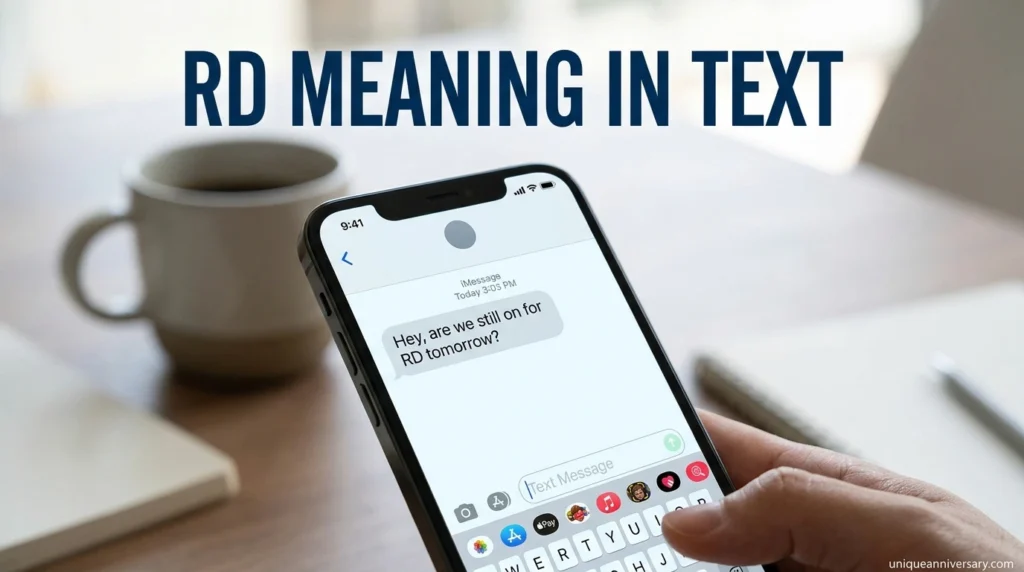
Have you ever been texting someone, scrolling through chats, or browsing social media when you suddenly come across a simple abbreviation like “RD” and pause for a moment? Your mind starts racing—What does this mean? Is it important? Am I missing something obvious? In today’s fast-paced digital world, where conversations happen in seconds and words are shortened into quick codes, understanding these small abbreviations can make a big difference in how we communicate.
“RD” is one of those versatile abbreviations that can carry multiple meanings depending on the context. From casual conversations to professional settings, its interpretation can shift in subtle but important ways. Knowing what “RD” means—and more importantly, how to interpret it—helps you stay connected, avoid misunderstandings, and communicate more confidently.
In this article, we’ll explore the meaning of “RD” in text from multiple angles, diving into its different interpretations, real-life usage, emotional implications, and practical lessons. By the end, you’ll not only understand what “RD” means but also how to use it naturally in your everyday conversations.
What Does RD Mean in Text?
At its core, “RD” is an abbreviation that commonly stands for “Alright,” “Read,” or “Road,” depending on the situation. In casual texting, it’s often used as a shortened way to say “alright” or “okay,” signaling agreement or acknowledgment.
For example, imagine a friend texts you: “Meet me at 6 PM?” You reply: “RD”
Here, “RD” simply means “alright”—a quick confirmation without typing the full word.
However, context is everything. In a different situation, such as: “Did you RD my message?” It clearly means “read.”
This flexibility makes “RD” both useful and slightly confusing. Unlike longer words, abbreviations rely heavily on tone, relationship, and conversation flow.
Understanding “RD” isn’t just about memorizing meanings—it’s about recognizing patterns in communication. The more you see it used, the easier it becomes to interpret naturally, almost instinctively.
The Evolution of Abbreviations Like RD
Text abbreviations didn’t appear overnight. They evolved alongside technology, especially during the rise of SMS messaging when character limits forced people to shorten words.
Back then, every character mattered. People started dropping vowels, shortening phrases, and creating quick codes like “RD.” Over time, these abbreviations became part of digital culture.
Today, even though we no longer have strict character limits, the habit remains. Why? Because it’s faster, easier, and feels more casual. Writing “RD” instead of “alright” saves time and adds a relaxed tone to the conversation.
Why Abbreviations Stick Around
- Speed: Faster typing means quicker responses
- Convenience: Less effort for common phrases
- Informality: Creates a casual, friendly vibe
- Trend Influence: Social media encourages shorter expressions
“RD” is part of this evolution—a small but meaningful piece of modern communication.
Different Meanings of RD in Text
One of the most interesting things about “RD” is how versatile it is. Its meaning changes based on context, making it important to read between the lines.
Common Interpretations
- Alright / Okay: Most common in casual chats
- Read: Often used in messaging apps
- Road: Seen in addresses or directions
- Real Deal: Sometimes used to describe authenticity
Example Scenarios
- “RD, I’ll be there.” → Agreement
- “You RD it yet?” → Asking if something was read
- “Main RD is blocked.” → Referring to a road
Understanding these variations helps you respond correctly without confusion.
RD in Casual Conversations
In everyday texting, “RD” usually carries a relaxed, friendly tone. It’s often used between friends, family members, or people who are comfortable with each other.
Imagine this conversation:
Friend: “Let’s grab food later.” You: “RD 👍”
This simple reply communicates agreement without overthinking. It keeps the conversation flowing naturally.
Emotional Tone of RD
- Neutral and calm
- Slightly informal
- Easygoing and non-serious
However, tone can still vary. A short “RD” might feel slightly distant in some contexts, especially if a longer response is expected.
RD in Professional or Formal Contexts
Using “RD” in professional settings requires caution. While it may be acceptable in informal workplace chats, it can sometimes come across as too casual.
When It Works
- Internal team chats
- Quick confirmations
- Informal communication platforms
When to Avoid It
- Emails to clients
- Formal reports
- Official communication
For example: Instead of writing “RD” in a professional email, it’s better to say “Alright” or “Understood.”
The key is understanding your audience. What works in a casual chat may not work in a formal environment.
How Context Changes the Meaning of RD
Context is everything when interpreting abbreviations like “RD.” The same two letters can mean entirely different things depending on the conversation.
Example Breakdown
- “RD the document?” → “Read”
- “RD, sounds good.” → “Alright”
- “Turn left on RD 5.” → “Road”
This is why paying attention to surrounding words is crucial. Without context, “RD” is just a guess.
Practical Tip
If you’re ever unsure, don’t hesitate to ask for clarification. It’s better than misunderstanding the message.
Emotional and Social Implications of Using RD
Language isn’t just about meaning—it’s also about feeling. Even small abbreviations like “RD” can influence how a message is perceived.
How It Can Feel
- Friendly: When used casually
- Dismissive: If overused or too brief
- Efficient: In fast-paced conversations
For instance, replying only with “RD” in a deep or emotional conversation might seem uninterested. On the other hand, in quick chats, it feels perfectly normal.
Understanding these nuances helps you communicate more thoughtfully.
RD vs Other Similar Abbreviations
“RD” isn’t the only abbreviation used for quick responses. It’s often compared to others like:
- OK / K: Simple acknowledgment
- Alright / Aight: Slightly longer but similar tone
- Got it: More clear and direct
Key Differences
- “RD” feels more casual than “Got it”
- “K” can sometimes feel too short or cold
- “Alright” feels more complete and expressive
Choosing the right word depends on how you want your message to feel.
Real-Life Examples of RD in Texting
Let’s look at some relatable situations where “RD” appears naturally.
Everyday Scenarios
Making Plans
“Meet at 7?” “RD, see you!”
Confirming Information
“Check the file.” “RD it already.”
Giving Directions
“Take the next RD.”
These examples show how seamlessly “RD” fits into daily communication.
Common Misunderstandings About RD
Because “RD” has multiple meanings, it’s easy to misinterpret.
Typical Confusions
- Thinking it always means “read”
- Assuming it’s formal
- Misreading tone in short replies
For example, someone might say “RD” meaning “alright,” but the receiver thinks it means “read,” leading to confusion.
How to Avoid Misunderstandings
- Look at the full sentence
- Consider the relationship with the sender
- Ask if unclear
Clear communication always beats assumptions.
When You Should Use RD
Using “RD” effectively depends on timing and context.
Best Situations
- Casual chats with friends
- Quick confirmations
- Informal messaging platforms
Situations to Avoid
- Serious discussions
- Professional emails
- Emotional conversations
The goal is to match your tone with the situation.
Practical Tips for Using RD Naturally
If you want to sound natural using “RD,” keep these tips in mind:
Keep It Balanced
Don’t overuse it. Mixing full words with abbreviations feels more natural.
Match the Tone
If the other person is formal, avoid “RD.” If they’re casual, it fits perfectly.
Add Context When Needed
Instead of just “RD,” try:
- “RD, I’ll handle it.”
- “RD, thanks!”
This adds clarity and warmth to your message.
The Future of Abbreviations Like RD
Language is always evolving, especially in digital communication. Abbreviations like “RD” may change, adapt, or even fade over time.
However, the idea behind them—quick, efficient communication—is here to stay.
New abbreviations will continue to appear, shaped by trends, technology, and culture. Understanding how “RD” works today prepares you to adapt to future changes effortlessly.
Lessons You Can Learn from RD
Beyond its meaning, “RD” teaches valuable lessons about communication:
- Clarity matters more than speed
- Context shapes meaning
- Tone can change everything
- Simplicity can be powerful
By applying these lessons, you can improve not just your texting but your overall communication skills.
FAQs
What is the most common meaning of RD in text?
The most common meaning of “RD” is “alright” or “okay,” especially in casual conversations.
Can RD mean “read” in messages?
Yes, “RD” is often used to mean “read,” particularly when asking if someone has seen a message or document.
Is RD appropriate for professional use?
It depends on the setting. It’s acceptable in informal workplace chats but not in formal emails or official communication.
Why do people use RD instead of full words?
People use “RD” for speed, convenience, and a casual tone in digital conversations.
Can RD have different meanings in different contexts?
Absolutely. “RD” can mean “alright,” “read,” or even “road,” depending on how it’s used.
How can I avoid misunderstanding RD?
Pay attention to context, sentence structure, and conversation tone. When in doubt, ask for clarification.
Conclusion
“RD” may look like just two simple letters, but it carries a surprising amount of meaning, flexibility, and nuance. From signaling agreement to confirming that something has been read, its interpretation depends entirely on context and tone. In casual conversations, it keeps communication quick and effortless, while in more formal settings, it reminds us to choose our words carefully.
Understanding “RD” is really about understanding modern communication itself—how we adapt language to fit speed, emotion, and connection. As you become more aware of how and when to use it, you’ll find yourself communicating more clearly and confidently.
In the end, it’s not just about what “RD” means—it’s about how you use it to connect with others in a meaningful way.