
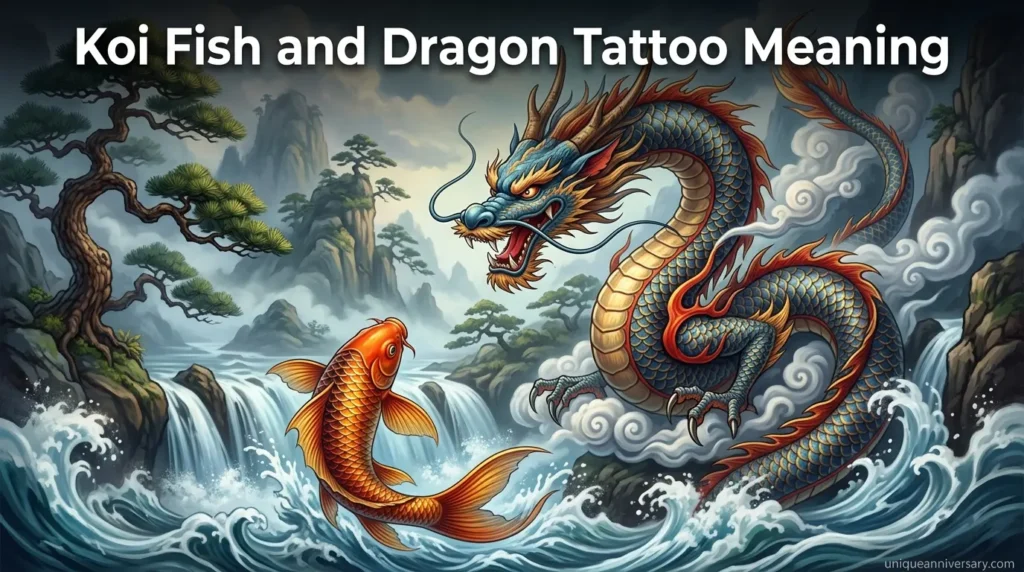
Imagine stepping into a quiet tattoo studio where the faint hum of machines blends with the scent of ink and antiseptic. On the wall hangs a design that instantly captures your attention—a powerful dragon coiling through crashing waves, meeting a koi fish swimming upstream with determined grace. There’s something almost alive about it, as if the image is frozen in the middle of a struggle between strength and perseverance. You pause for a moment and wonder: what story does this tattoo tell?
The combination of koi fish and dragon in tattoo art is not just visually striking—it carries deep symbolic meaning rooted in Asian mythology, especially Japanese and Chinese traditions. These two creatures represent powerful forces of transformation, resilience, ambition, and spiritual growth. People often choose this design not only for its beauty but for the life philosophy it represents: overcoming struggle, embracing change, and rising into one’s highest potential. Understanding this tattoo is like reading a visual story about human experience itself, where challenges become stepping stones toward greatness.
The Core Meaning of Koi Fish and Dragon Tattoo
The koi fish and dragon tattoo is widely interpreted as a symbol of transformation and achievement. At its heart, it tells the story of a koi fish that swims upstream against strong currents, representing persistence and determination. According to legend, when a koi successfully reaches the top of a waterfall known as the Dragon Gate, it transforms into a powerful dragon.
This transformation is the essence of the tattoo’s meaning. It represents the journey from struggle to success, from ordinary to extraordinary. People often choose this design to reflect their personal growth, especially after overcoming hardships such as financial struggles, emotional pain, or major life transitions.
Personal Symbolism
For many, the koi represents the early stages of life—full of challenges but also potential. The dragon represents the result of perseverance: wisdom, strength, and achievement. Together, they form a complete life cycle, reminding the wearer that struggle is not the end but the beginning of transformation.
The Symbolism of Koi Fish in Depth
The koi fish alone carries deep meaning in Eastern cultures. It is often associated with perseverance, courage, and ambition.
Strength in Adversity
Koi fish are known for swimming upstream, even against strong currents. This behavior symbolizes resilience in the face of hardship. In tattoo art, the koi often represents someone who refuses to give up, no matter how difficult life becomes.
Patience and Growth
Unlike fast-moving creatures, koi move steadily and deliberately. This represents patience and long-term growth. It suggests that success is not instant but built through consistent effort.
Emotional Meaning in Real Life
Many people connect the koi fish to personal struggles—recovering from failure, rebuilding life after loss, or striving toward a dream. It becomes a reminder that slow progress is still progress, and endurance always leads somewhere meaningful.
The Symbolism of the Dragon
The dragon is one of the most powerful mythical creatures in Eastern culture. Unlike Western dragons often associated with destruction, Eastern dragons symbolize wisdom, protection, and spiritual power.
Power and Authority
In tattoos, the dragon often represents dominance over challenges. It is a symbol of someone who has reached a stage of mastery in life.
Spiritual Awakening
Dragons are also associated with enlightenment and higher consciousness. They symbolize inner awakening and understanding of life’s deeper truths.
Guardian Energy
Many believe dragons act as protectors. In tattoo form, they may represent safeguarding one’s journey, goals, or loved ones.
The Transformation: From Koi to Dragon
The most powerful aspect of this tattoo lies in the transformation story. It is not just about two separate creatures—it is about evolution.
The Dragon Gate Legend
According to myth, koi fish that swim upstream and leap through the Dragon Gate waterfall are transformed into dragons. This story represents achieving greatness through perseverance.
Symbol of Life Progression
The koi-to-dragon transformation is often seen as a metaphor for human development. We start with struggles (koi stage), face challenges (upstream journey), and eventually achieve success or enlightenment (dragon stage).
Emotional Reflection
Many people resonate deeply with this idea because it reflects real life: hardship is temporary, but growth is permanent.
Cultural Origins and Mythological Roots
The koi fish and dragon symbolism originates primarily from Chinese and Japanese mythology.
Chinese Influence
In Chinese folklore, the Dragon Gate legend is tied to ambition and success in education or career. Passing the gate is like achieving a life milestone.
Japanese Interpretation
In Japanese culture, koi fish represent courage and perseverance, especially during festivals like Children’s Day, where koi flags symbolize strength in children.
Blending of Traditions
Over time, tattoo art has blended both cultural interpretations into a unified design that represents universal human struggle and triumph.
Life Lessons Behind the Tattoo
This tattoo is not just art—it carries philosophical meaning that can be applied to everyday life.
Embracing Struggles
The koi reminds us that challenges are necessary for growth. Without resistance, strength cannot develop.
Transformation Requires Effort
The dragon does not appear instantly; it is earned through persistence. This reflects how success in real life demands patience and consistency.
Believing in Potential
Even the smallest koi has the potential to become a dragon. This teaches self-belief and confidence in one’s journey.
Color Symbolism in Koi and Dragon Tattoos
Colors play an important role in enhancing the meaning of the tattoo.
Koi Fish Colors
- Red koi: Love, energy, and bravery
- Black koi: Overcoming major obstacles
- Gold koi: Wealth and success
- Blue koi: Peace and calmness
Dragon Colors
- Green dragon: Growth and balance
- Red dragon: Passion and power
- Black dragon: Mystery and strength
- Gold dragon: Divine wisdom and prosperity
These color choices allow individuals to personalize the tattoo based on their life story.
Tattoo Placement and Design Interpretation
Where the tattoo is placed can also influence its meaning and visual impact.
Full Back Designs
Often used for large koi-to-dragon transformations, symbolizing a full life journey.
Sleeve Tattoos
Represent continuous growth and personal evolution over time.
Chest or Shoulder Placement
These placements symbolize strength, protection, and emotional depth.
Flowing Water Elements
Water is often included in designs, representing life’s unpredictable challenges and emotional currents.
Masculine and Feminine Interpretations
Although often seen as bold and powerful, this tattoo carries meaning for all genders.
Masculine Energy
For men, it often represents ambition, strength, and overcoming external challenges.
Feminine Energy
For women, it can symbolize emotional resilience, inner strength, and graceful perseverance.
Balanced Identity
Many designs blend both energies, showing that true strength comes from harmony between determination and adaptability.
Cultural Respect and Misinterpretations
While the tattoo is popular worldwide, it is important to understand its cultural roots.
Avoiding Superficial Use
Choosing the design purely for aesthetics without understanding its meaning can lead to cultural misinterpretation.
Respecting Symbolism
Understanding the koi and dragon story adds depth and respect to the tattoo.
Personal Connection Matters
The most meaningful tattoos are those that reflect genuine personal experiences rather than trends.
Modern Tattoo Styles and Artistic Evolution
Tattoo artistry has evolved, giving new life to the koi fish and dragon design.
Realism Style
Highly detailed tattoos that look almost lifelike, emphasizing emotion and movement.
Watercolor Style
Soft, flowing colors that represent fluidity and emotional expression.
Japanese Traditional Style
Bold outlines, vibrant colors, and strong symbolism rooted in tradition.
Minimalist Interpretations
Simplified versions focusing on clean lines and subtle meaning.
Real-Life Interpretations and Personal Stories
Many people choose this tattoo to mark significant life moments.
Overcoming Failure
Some individuals get this tattoo after rebuilding their lives following career or financial setbacks.
Personal Transformation
Others use it to symbolize recovery from emotional struggles or addiction.
Achieving Goals
For many, it represents reaching a long-term dream after years of effort.
These stories make the tattoo deeply personal and emotionally powerful.
Conclusion
The koi fish and dragon tattoo is far more than an artistic design—it is a living story of transformation, resilience, and personal growth. It reflects the journey every individual faces: starting with struggle, enduring challenges, and ultimately evolving into a stronger version of oneself.
The koi represents patience and persistence, while the dragon embodies strength, wisdom, and achievement. Together, they form a powerful reminder that no effort is wasted and every challenge shapes who we become. Whether chosen for cultural appreciation or personal meaning, this tattoo continues to inspire people around the world to keep moving forward, no matter how strong the current may be.
FAQs
What does a koi fish turning into a dragon symbolize?
It represents transformation through struggle, showing that perseverance leads to success and personal growth.
Is the koi and dragon tattoo lucky?
Yes, many believe it brings luck, especially in achieving goals and overcoming obstacles.
What does a black koi fish mean in tattoos?
A black koi often symbolizes overcoming major life challenges or difficult transitions.
Why is the dragon included with koi fish in tattoos?
The dragon represents the final stage of transformation—wisdom, strength, and success after struggle.
Can women get koi and dragon tattoos?
Absolutely. The design represents universal qualities like resilience and growth, suitable for all genders.
Is this tattoo culturally significant?
Yes, it originates from Chinese and Japanese mythology, so understanding its cultural meaning adds depth and respect.